01/12/2010

LONDON IS LONDON


Thursday, November 25th


We left, my friends and I, resigned to the idea that we would have to cope with terrible weather: for days the weather forecast had been telling us that freezing temperatures and snow would expect us in England.
But nothing would have stopped us. Nothing indeed. And we left for London after travelling by car, bus, train, underground from our different home places and, especially after standing at the embark gate for 2 hours because of a delay. Two hours’ delay for flights is something rather average. Only one always hopes in exceptions! We arrived in London and again we took a train + bus and got to  our hotel quite late at night, half frozen for the bitterly cold temperatures. I insisted with my friends, all wool clad from head to toes that  I didn’t need gloves, scarf or a hat because living in the mountains I’m used to cold and do not usually use them. I had to surrender after two days and buy at least a pair of gloves since that cold weather was unbearable!
Once in the hotel, we were exhausted, freezing and dreaming  of being sleeping under warm blankets but our stomachs claimed their rights: what about some spaghetti?
 Day 1 over. No snow in London. Lucky us!

Friday, 26th November


On Friday we woke up to a surprisingly sunny day. Our plan was to travel to the countryside for a picturesque trip. Wwhat better weather, then? We happily took a bus to Marylebone station, then a train to High Wycombe then a taxi to … Turville! What a lovely picturesque place! An enchanting village where peace quiet and fresh air welcome you in the middle of nowhere! Well, actually it is in Buckinghamshire but neither the funny but kind Indian taxi driver knew where it was.  He needed help to find it! What can you do in Turville? Very little indeed and life must be everything but stressing there. The village is much loved by TV and film companies. It is smaller than we’d anticipated, but certainly lovely. 
What did we do? Walked, stared at every little familiar corner, door, path and alley, entered the little church, took a lot of pictures, got our shoes dirty with mud, laughed a lot and , last but not least, ate delicious fish and chips in the local pub. (Sigh!) In the afternoon? Oxford Street. Shopping, shopping, and shopping. Actually I hate it but what wouldn’t you do for your friend? It can be even less boring with friends . Just a question: is London administration in great financial restraints too? The Christmas lights were just the same I had seen last year on TV!
Day 2 over. No snow in London.  Lucky, indeed!

 Saturday 27th November


 On Saturday our goal was Hampstead, a beautiful area of London located 4 miles north-west of Charing Cross. It is known for its intellectual, liberal, artistic, musical and literary associations and for the large and hilly parkland Hampstead Heath. It is also home to some of the most expensive housing in the London area, or indeed anywhere in the world, with large houses selling for up to £50m . 

The village of Hampstead has more millionaires within its boundaries than any other area of the United Kingdom. Were we looking for a wonderful house in London? Not yet. We live in hope to win the lottery though. Were we in search for a very rich husband? Not indeed. Too late for me . While my unmarried, happily single friends wouldn’t mind finding one. 
Actually, we just wanted to visit the parish of the place, St John's-at-Hampstead. What a beautiful church! Perfect location for any kind of religious ceremony, from weddings to funerals (Sigh!)
Lunch in the park of the church at Covent Garden. Our sandwiches were so good that we were surrounded by hungry fat pigeons! We finished them quickly (the sandwiches, not the pigeons) because they were good and we hungry, but especially because we didn’t like the company and it was tremendously, bitterly cold. My hands were purple and ached. That’s when I surrendered and bought a pair of pretty, quite Regency style gloves. 
Then, we walked in the streets nearby Covent Garden in search for Henrietta Street. A plate on the wall reminds the  passer-by that Jane Austen lived there in 1813-14
Early in the afternoon we were in the crazy crowded frenzy of Piccadilly Circus. We had to meet an English friend of one of us, Christine, in the luxurious tea room at Fortnum & Mason’s (since 1707) The lovely lady arrived on time and we had our tea with scones and cakes. Delicious afternoon. So British style. Though I had a very good hot cappuccino very Italian style with my English scones. And strawberry jam.  After a couple of hours there… shopping, shopping, and shopping again!
Day 3 over. Again, no snow in London. 

Sunday 29th November


On Sunday we visited The National Portrait Gallery . The Gallery was founded in 1856 to collect portraits of famous British men and women. You can explore over 160,000 portraits from the 16th Century to present day. Think of any famous British  person you know from history to the arts, from the 16thcentury to these days …


 you’ll find their portrait there. Jane Austen? The Brontes? King Richard III? James Joyce? William Shakespeare? Queen Elizabeth or Bonnie Prince Charlie? They are all there. At the moment you can also visit the exhibition “Thomas Lawrence. Regency Power and Brilliance” .
In the afternoon? Try to guess… Shopping, shopping and shopping!
Day 4 over. No trace of snow. What lucky girls!

Monday 29th November

On Monday,  we sadly packed all our stuff,  had a half British- half Italian breakfast,  faced a strike of the tube workers and took our way to the airport. Incredible but true,  there was only a bit of traffic on the surface and there were plenty of buses running. London is London, not Rome!
Even that last day, with a cloudy sky promising snow …  Not a flake in London. Not until yesterday, when we were  back home. 


What a pity it didn't snow... It could have been the perfect excuse to stay on …


By the way, did you spot any familiar place apart from Westminster with Big Ben? Really familiar?  Pardon? Where am I in all those places?  Behind the camera, of course! However, more pics  (unfortunately of me too!) and words next  (RA) Friday!

30/11/2010

GIVEAWAY WINNER - THE DE LACY INHERITANCE BY ELIZABETH ASHWORTH


Hello, everybody! This brief posting is just to announce the name of the winner of Elizabeth Ashworth 's historical novel,  The De Lacy Inheritance. Thank to Elizabeth for guesposting on Fly High (HERE) and give away a free copy of her book,  as well as to all of you who have read her post and commented.  Glad to be part of such a big interesting community, I'm going to announce the name of winner.

My congratulations to ...

tiredwkids !!!

26/11/2010

RA FRIDAY - ROSY THORNTON ON NORTH AND SOUTH, RICHARD'S THORNTON AND HER WRITING CAREER. GUEST POST AND DOUBLE GIVEAWAY.

Rosy Thornton had managed to reach the age of 40 without ever attempting to write a novel. In fact, she had written no fiction at all since the 'imaginative essays' she was obliged to produce at school . But BBC started broadcasting an adaptation of North and South by Mrs Gaskell and Rosy started watching it ...
Cambridgeshire is her home now. In her  daily existence she is  a lecturer and Fellow in Law at Emmanuel College, Cambridge. She teaches and writes on an eclectic mix of topics, including landlord and tenant law, trusts, homelessness, and women and the law.
You'll find more about her at her website .
Here's her RA Friday  post.


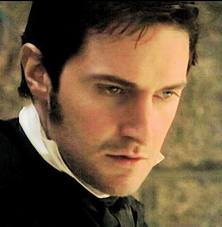
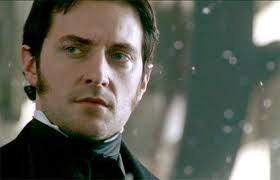
Regular readers of this blog will have read with great enjoyment, as I did, the recent guest spot on RA Friday by romantic novelist Phillipa Ashley. Phillipa told us how she began writing fiction as a direct result of watching the BBC’s 2004 adaptation of North and South – with the gorgeously smouldering Richard Armitage in the leading rĂ´le as mill owner John Thornton.

Well, ‘do not adjust your sets’, as they used to say on telly when I was a kid. You haven’t scrolled back down to Phillipa’s post by mistake. It’s just that my own story is uncannily similar. My own career as a novelist was also kicked off by watching RA in his waistcoat and cravat on Sunday evenings.

I didn’t know Phillipa then, though we have a lot in common, besides our love of period drama (and Richard!). Both of us have careers involving writing for a living (she as journalist and copy writer, me as an academic lawyer). Both of us reached our forties without ever thinking of writing a novel.

When the closing credits rolled at the end of the final episode of North and South, I was buzzing with excitement, but I also felt bereft.  Like Phillipa, I went online to find other people who had been inspired by the serial. Like Phillipa, I had a go at writing fanfic based on the characters of John and Margaret – in my case, a Victorian pastiche sequel to Gaskell’s novel. And, like Phillipa, I found that when my fanfic was finished I’d been bitten by the storytelling bug, and went on to have a go at writing my first independent novel.


The voice I discovered was contemporary and humorous – quite different from the historical one, imitative of Gaskell, that I had used for my fanfic. But the story I found to tell owed a lot to North and South. The heroine of my first novel, More Than Love Letters, is a clergyman’s daughter, and actually named Margaret by her father after Margaret Hale in North and South. My Margaret is very much a Victorian heroine out of her time: all pale skin and dark curls and burning moral zeal. Like Gaskell’s Margaret, she moves to a new town where she meets – and eventually falls in love with – a man considerably her senior who is already an established figure in the community. My hero is not a mill owner and magistrate but the town’s MP – and it’s no coincidence that his name is Richard. No prizes for guessing whose picture was in my mind as I was writing the book!


I was lucky enough to find a literary agent who liked the novel and agreed to represent me. He helped me knock it into shape for publication, and landed me a two-book contract with Headline in March 2006. By an amazing coincidence, Phillipa Ashley signed a two-book deal with the same publisher just a few weeks later! We had encouraged each other’s writing since the early, fanfic days, and egged each other into taking the plunge and sending our work to agents. Now we were both breaking into print together. It was – and still remains for me – a dream come true.

There have been other novels since More Than Love Letters. My fourth and latest, The Tapestry of Love, was released in paperback last month. But none of it would have happened without the support and friendship of Phillipa and the rest of the North and South fanfic community – and the inspiration of Richard Armitage on my TV screen with his sombre suit, silk cravat and sexy, brooding stare.
    
Thanks Rosy for this lovely blogpost!  

NOW ( DOUBLE) GIVEAWAY TIME!!!


Two lucky commenters can win a copy of "More than Love Letters" or "The Tapestry of Love" by Rosy Thornton. The giveaway is open worldwide and ends next Thursday December 2nd.  Don't forget to add your e-mail address and ... good luck! Have a very good weekend!

24/11/2010

ELIZABETH ASWORTH AND THE DE LACY INHERITANCE - AUTHOR GUESTPOST


I’ve always been a writer and I had my first publication at eleven years old when I sent an article I’d written about the Spanish Riding School in Vienna to the girls’ magazine Diana.  It’s been a long journey from there to the publication of my first novel The de Lacy Inheritance. Along the way I’ve had lots of articles and short stories published in magazines and written three local interest books, but there’s something about being a novelist that makes you a ‘real’ author.
 The de Lacy Inheritance came about because of a legend I discovered when I was writing my local interest book Tales of Old LancashireThis old story, about a Holy Hermit who lived in a cave under the castle at Clitheroe captured my imagination.  I did some research to discover how much of it was true and found that the man was Richard FitzEustace who had contracted leprosy whilst on Crusade with Richard the Lionheart and who lost everything because of it – home, family, fortune, his standing in society as a nobleman and any chance of a normal life.

I felt compelled to tell his story, although I knew that writing a novel with a leper for a hero was going to be a challenge.  I also wanted to explore the attitudes of people towards disease.  In medieval times illness was often viewed as a punishment for sin and I began to wonder what sins Richard had committed, or thought that he had committed, to deserve such a fate, and what he believed he could do to redeem himself.  Then I added the story of Richard’s younger sister Johanna, who is also based on a real person, and her role in deciding just who should inherit the lands across Lancashire and Yorkshire after the death of Robert de Lacy.
 I was aware that the novel would not be easy to sell to a publisher.   My first plan was to self-publish it and try to sell it in the local area but the book was accepted by a small independent publisher, Myrmidon Books, and went on to be not only stocked in Waterstone’s but on their 3 for 2 tables during July.
Reactions to the book have been very positive and despite the leprosy most readers have found Richard FitzEustace to be an appealing person.  And there is some romance as well.  It’s not all gloomy.
You can read the first chapter on my website: www.elizabethashworth.com and there’s a growing archive about the de Lacy family and a slide show of some of the settings for the novel on my blog: www.elizabethashworth.wordpress.com

Just leave your comment  to enter an international giveaway! Win a copy of The de Lacy Inheritance by Elizabeth Ashworth. The name of the winner will be announced on Tuesday 30th November. Good luck!

22/11/2010

MISSING SPOOKS , WATCHING SPIES. BBC CAMBRIDGE SPIES (2003), MY REVIEW


This is the story of the most notorious double agents in the history of spying.
Four very British traitors (from Cambridge Spies DVD)

"Betrayal is a cancer. Let it eat your soul ...". I'm  quoting Sir Harry Pearce from Spooks 9. But it doesn't seem like that at all watching this gripping drama.The glamorous four are rather romanticised and manageto pass through awful historical tragedies with a certain light touch.
I found it among my pile of TBW stuff. It is a BBC 4-part series starring Tom Hollander, (Guy Burgess)  Toby Stephens (Harold Kim Philby) , Rupert Penry-Jones (Donald Maclean) and Samuel West (Anthony Blunt) . It conjugates spy and period  drama. CAMBRIDGE SPIES was broadcast on BB2 in 2003 and,  if you like me missed it, it is available on DVD.
For someone loving period drama,  it is a happy reunion of familiar faces. Brilliant cast indeed.


The truth behind fiction
Maclean, Burgess, Philby and Blunt were British members of a KGB spy ring that penetrated the intelligence system of the UK and passed vital information to the Soviets during World War Two and the early stages of the Cold War.
The members of the ring were Donald Maclean  (1913 - 1983) Guy Burgess (1911 - 1963), Harold 'Kim' Philby (1912 - 1988) and Anthony Blunt (1907 - 1983). Several other people have been suggested as belonging to the ring, including John Cairncross. Blunt became a communist in the early 1930s and was recruited by the NKVD (later KGB), the Soviet security agency. While teaching at Cambridge University, Blunt was influential in recruiting the other three, who were all students there.

Burgess became a journalist after he left university, but on the outbreak of war joined MI6. Maclean was in the Foreign Office during the same period. In 1951, tipped off by Philby that they were under suspicion, Burgess and Maclean defected to the Soviet Union, where they spent the rest of their lives.
Philby was also a journalist but joined SIS (also known as MI6) in 1940. Just before the war ended, he was appointed head of SIS's anti-Soviet section. Thus the man charged with running operations against the Soviets was a KGB agent. He later became chief British intelligence officer in the United States. After Burgess and Maclean fled to the Soviet Union, Philby came under suspicion and was forced to resign. In 1963, he defected to the Soviet Union, and died there. Blunt worked for MI5 during the war. After the war he had a distinguished career as an art historian. He was director of the Courtauld Institute and Surveyor of the Queen's Pictures. He was knighted in 1956. In 1963, the British government discovered he was a spy but offered him immunity in return for information. In 1979, the story got out and Blunt was stripped of his knighthood.

Good quality TV
It is good TV drama though I've read reviews complaining for many historical inaccuracies. Being not that informed about the real story of these glamorous double agents, I just tried to enjoy the interesting, involving plot Peter Moffat created in his screenplay. I loved the 4 protagonists, I admired the fact that the characters are portrayed accurately and convincingly. Having just seen the last of the four parts, I must admit  that for entertainment value it is top notch. If you watch it with an open mind, as the game of four masterminds who underplayed the archaic MI6 for their principles, you'll enjoy 4 hours of great TV.

19/11/2010

RA FRIDAY - MISSING LUCAS. BUT GISBORNE, TOO. GUEST POST BY LEAH LARSON

This week's RA Friday has got a very special guest: Leah Larson, Associate Professor of English and graduate program director at  Our Lady of the Lake, a small Catholic liberal arts university. She has published an article on Maria Edgworth's novel Belinda and has written numerous articles for encyclopedias and other reference works. She has  presented papers on Robin Hood at six conferences.


Richard Armitage has been the inspiration for books, artwork, and fan videos. I’m not creative, but I can say that Richard Armitage has made me a better scholar. As a university professor, I have to publish articles and present papers at conferences. Because of my heavy teaching and administrative load, I often have problems finding inspiration for my scholarly work. Two and a half years ago, while staring at a photo of Sir Guy in all his leather loveliness, I was inspired to turn my obsession into something scholarly. I presented a paper on the BBC Robin Hood at the Texas Medieval Association conference and was complimented by a major medieval scholar who encouraged me to push on with this topic. At a larger conference, my paper on fan responses to Sir Guy caught the attention of a top Robin Hood scholar, who asked me to present at the International Conference of Robin Hood Scholars. So there I was, standing in front of a full house, which included every major Robin Hood scholar—even Stephen Knight, the foremost authority on the Robin Hood legend—talking about Sir Guy fan fiction and fan videos.

 
The first person to ask me a question after my paper was Frances Tempest, the costume designer for Robin Hood series one and two—the woman who designed the buttery leathers that have starred (along with the gorgeous wearer of these leathers) in hundreds of fan videos. All I wanted to ask was if she had fitted the costume. But I knew she had and knew if I was going to retain any scholarly integrity I couldn’t ask that question! Frances is a lovely woman, and I have enjoyed visiting her when I am in the UK. I try to suppress my fangirl side, but did ask her if she knew what she had started by dressing Richard in such tight leather. She just laughed.


In researching the Robin Hood legend, I developed an appreciation for the series. I know a lot of people have put it down, but on close examination it stands up as being as good as any other Robin Hood. In Jane Austen adaptations, directors cannot stray too far from the novel. But with Robin Hood there is no novel, no one “canonical text.” The Robin Hood legend has always been played with and changed. Robin didn’t become a member of the nobility until the Elizabethan age. And the legend wasn’t always set during the time of Richard I. Like the Arthurian legend, each retelling of the Robin Hood legend reflects the ideas of the society that is retelling it. With this in mind, I spent (many pleasurable) hours viewing the BBC Robin Hood, writing down much of the dialog, noting interesting costumes and connections to earlier versions of the story. Of course, the parts of the series where Guy played a major role required much more in-depth examination!


I found only one article that focused solely on the character of Guy as seen in the ballad. Stuart Kane, the author of the article, stated that the Guy of the ballad was erotically charged and this eroticism created a discomfort in Robin Hood which led to his extreme violence. Kane’s description reminded me of the episode “Tattoo? What Tattoo?” where Robin displays his most violent self. I believe that there is something inherently erotic in this character as portrayed in the original ballad, but that no one until Richard was able to fully express this eroticism. And—in another thrilling RH scholar moment—Stephen Knight told me that he thought I was onto something in my analysis of Guy’s character. But the BBC Robin Hood and Richard took this character even farther, expanding Sir Guy beyond the brute of most versions or even the erotic brute of the ballad.


In the original ballad, Sir Guy is dressed in horse skin—tail to head. In the series, Guy is the only character who always wears leather—at least in the first two series. Since the beginning of my research, I’ve wondered about the connection between the leather and the horse skin. I’ve talked to other scholars who have said “They must have read the ballad and made a connection.” But Frances Tempest insists that she didn’t know about the original Sir Guy and the horse skin when she designed the costume.
So why give Guy, and only Guy, all leather all the time?


As a medievalist, I love Guy. I love the community that my interest in Guy has enabled me to join. My favorite RA characters are medieval—Uthred and Guy. I wish Richard would play Richard III or my favorite medieval hero, William Marshal. But I do have Thorin to look forward to. I’m not a big Tolkien fan (at least not of his fiction, but I bow down to his scholarly work). But Tolkien was a major C20 medieval scholar. So who knows what scholarly avenues Richard will take me down in his portrayal of this heroic dwarf!

Thanks for this amazing guest post , Leah!
And a very good weekend, everyone!
MG

17/11/2010

WHAT I'VE BEEN WATCHING - THE DEVIL'S WHORE (2008)


It's actually rare to find a costume drama set in the 17th century. The only good one I can remember, which I also reviewed on this blog, is  Gunpowder, Treason and Plot dealing with the Gunpowder Plot (1605) against James I . The Devil's Whore, which I watched at the weekend,  is an extremely-engaging and well-acted 4-part drama about the period 1642-1660 covering the English Civil War and the subsequent execution of King Charles I and his replacement with England's only republican government. Don't expect to learn or understand more about that complicated historical period but for once drama faced not an easy task and chose differently for its time setting.


The Devil’s Whore, is full of wild storms, furious winds and camera angles so eccentric they make it look like chaos has come to Earth. its talented director, Marc Munden ,  tries  to conjure a sense of impending apocalypse. It is s a tale set in the English Civil War about a fictional woman, Angelica Fanshawe, and  how her life intersects with the real events and  key figures of the time, including Charles I ( the beheaded  Stuart King) and Oliver Cromwell

  
To many who witnessed this period in British history, apocalyptic was just how it felt. In the 1640s fighting engulfed the country and the rule of  law collapsed: it was the end of the world as people knew it. 
The speed with which the plot unfurled is, at times, bewildering. I was completely taken away by the quick pace and gripping narration of the events.  Kudos to Peter Flannery, the scriptwriter,  for making this period of history really interesting. This difficult period, as I wrote in the opening,  has never really been covered in movies or TV.


Peter Capaldi is great as a doomed king, Michael Fassbender is intense and stunning as Rainsborough,  Dominic West magnetic as Oliver Cromwell, but my favourites are John Simm and Andrea Riseborough. Both act intensely and make me want to keep watching and get quickly to their next meeting. The chemistry, sparring and respect between Sexby and Angelica is fascinating! Almost perfect...


The Devil's Whore was broadcast on Channel 4 in 2008. The initial critical reception was good, though there has been some criticism of the omission of some figures and events (such as John Pym, the Earl of Bedford, Sir Thomas Fairfax, Sir Denzil Holles, 1st Baron Holles, Edward Hyde, 1st Earl of Clarendon, Pride's Purge, Colonel Sir John Hutchinson and the Bishops' Wars) and the fictionalisation of others (such as the suggestion that Cromwell orchestrated Rainsborough's death, of Rainsborough not Sexby being a close friend of Cromwell's, and Sexby's assassination attempt on Cromwell).

The series is still available to be watched online on Channel 4 site (but only to UK watchers).  It is also available on DVD at Amazon.co.uk. More information about the cast  and the series at  http://www.imdb.com/title/tt1050057/.


16/11/2010

GIVEAWAY WINNERS FOR FANTASY TIME INC. BY SHERRI RABINOWITZ

Hello, there! Good news for you. I'm here to announce the names of the winners in the latest  book giveaway  contest here on Fly High! Sherri Rabinowitz was so kind to answer my questions last week and to give 3 of you the chance to win a copy of her novel, FANTASY TIME INC. Thank you so much, Sherri, for your kindness and genorousity!

THE WINNERS ARE ....

1. RAD HALL (for the international giveaway)
2 & 3 . INSPIRED KATHY & ALEXA ADAMS (for the US /Canada giveaway)

CONGRATULATIONS TO ALL THE WINNERS!!!