Showing posts with label Jane Eyre. Show all posts

22/08/2016

BOOKS UNDER THE SPOTLIGHT


New books under the spotlight, ebooks to be more precise. The latest downloaded in my iPad and added to my TBR list. A book for each of my favourite genres. Number 1 is romance, number 2 historical fiction. 

1. The Full Brontë is a light-hearted novella set around a beautiful Yorkshire manor house which is being used to film the latest version of Jane Eyre. 

Gayle Hargreaves has never read a Brontë novel so, when a film crew descends on her small Yorkshire town and her life is thrown into disarray, she isn’t impressed. 
And she’s even less impressed when the handsome actor playing Mr Rochester starts flirting with her. But she can handle it, can’t she? After all, she just isn’t the sort to fall for a man in period costume... 
Set in the beautiful landscape so beloved of the Brontë sisters, The Full Brontë is a light-hearted novella. 

03/12/2013

HOMES OF CLASSIC LITERATURE


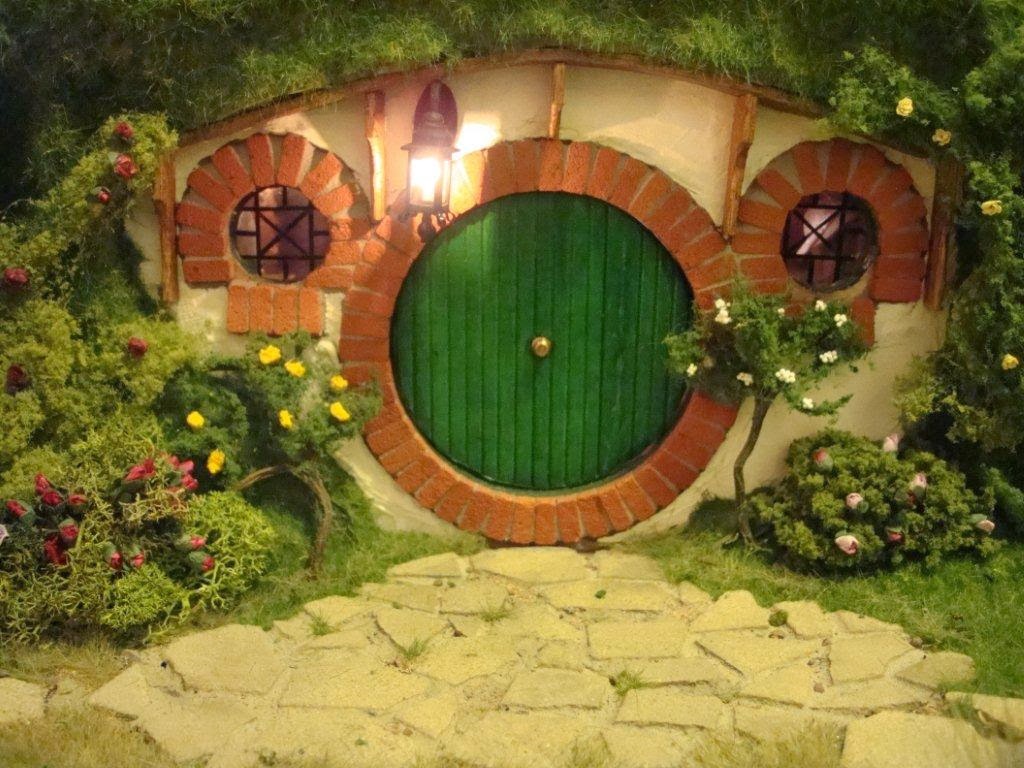
At many a time we can become lost between the pages of a good book. Immersed in its fantasy and mysterious tales, the captivating characters, scenes and a little imagination can easily take you there. This infographic delves into some classic stories from The Hobbit to the depths of The Secret Garden to show you nine of the famous homes found within these tales. Ready for the tour?

16/04/2013

SHEILA HANCOCK, A JOURNEY TO THE BRONTES' COUNTRY AND INTO HERSELF


Perspectives: The Brilliant Brontes was on ITV  at the end of March and it is still available in streaming on their iPlayer. 

What was really touching while watching it was how deeply the commenter, actor Sheila Hancock,  was connected both with the Brontes and with their works. 

Watch the clip I've added for you below to get an idea. You can feel how moved she is, her voice broken more than once and eyes filled with tears . It is as if she is undertaking an honest journey into herself while visiting the places where the Bronte sisters lived, wrote, dreamt and died.

Impossible not to be  moved by the tragic series of deaths their official biographies are charachterized by, but following Sheila Hancock in her gripping journey to Yorkshire and into herself has been much more than that.

She starts the documentary remembering how much in love she was with Laurence Olivier’s Heathcliff as a young girl and how she felt betrayed when later on she re- read the book Emily Bronte had written. 

15/02/2013

ASK JANE EYRE


"Do you think, because I am poor, obscure, plain, and little, I am soulless and heartless? You think wrong!--I have as much soul as you,--and full as much heart! And if God had gifted me with some beauty and much wealth, I should have made it as hard for you to leave me, as it is now for me to leave you"

If you are obscure, plain, poor and little,  life  may not be smooth and easy for you. Ask Jane Eyre. You may have to bite wicked older cousins who want to torture you,  defend yourself from a jealous aunt who wishes you were dead, you may have to survive long solitary hours locked in a scary red room, then to strive to keep yourself sane and alive in a bleak, heartless place like a school for poor girls,  you must accept to go on living without anybody caring for you or loving you ... but, in the end, you'll meet your hero, your Mr Rochester and have your own reward. He is not tender and handsome, maybe, but impetuous, fascinating, authoritative, mysterious, restless. Anyhow, he doesn't trample on you, he doesn't make you feel a nobody, he treats you as his equal and trusts you. Last but not least, he desires you passionately. What if you discover on your wedding day that he has a mad wife in the attic and can't marry you? No panic, hold on, you can make it. You'll have to endure the awesome shock, run away and give up your dreams for a while, live among strangers you'll  learn to love for about a year, but be sure,  at last,  you'll have your reward, you'll have your happy ending.

22/07/2012

A NEW TALE BY SUMMER DAY: ANNE EYRE - AN EXCERPT + GIVEAWAY


Summer Day has already been my guest with her fanfiction tales based on classics: Pride and Princesses and Wuthering Nights. Today I'm glad to present her new novel, ANNE EYRE (to be released in August) . There's a digital copy for you! Get a chance to win it: leave your comment + e-mail address! The contest is open worldwide and ends on July 28th.

From the Blurb 

When eighteen year old Anne Eyre accepts a summer job at majestic Thornfield Hall, she meets the handsome Nathanial Rochester – a man with a devastating secret. From the writer of Pride & Princesses and Wuthering Nights, Anne Eyre is inspired by the classic, gothic romance, Jane Eyre

Read an excerpt from the novel

08/10/2011

AT THE CINEMA - JANE EYRE


If there is a heroine I deeply sympathized with in my teenage, she was Jane Eyre. She substituted Jo March, who had been my model heroine when I was a child. Jane Eyre by Charlotte Bronte is the book I have most frequently re-read in my life. Strangely enough, I haven't written much about the book or the several adaptations I saw on FLY HIGH. This is the first real occasion I find to discuss my admiration for Jane. Yes, for Jane more than for Rochester.

01/04/2010

GOTHIC BRONTES

Though they lived in the Victorian Age and published their novels in those years, the three Bronte sisters share a great deal with the Romantic Age in their works: themes, literary devices and features, wild nature and tormented souls. For example, Charlotte’s Mr Rochester or Emily’s Heathcliff embody the typical Byronic hero: moody, restless, wild in manners, tormented but so attractive. The heroes and the heroines in their novels tend to be atypical, anti-conformist, unable to simply accept their duties. They are often led by feelings and passions. And all of that is not typically Victorian. The reading audience was shocked by Emily’s Wuthering Heights (1847). (I still am sometimes re-reading it: she was so brave at writing and publishing such a novel at that time)

A literary taste the three writers share is that for Gothic elements. And this is what I want to point out in this post I prepared for The All About the Brontes Challenge.

Gothic novels were very popular at the end of the 18th century (the first one was published 1764 by Horace Walpole and was titled The Castle of Otranto) and their popularity went on through the Romantic Age. Lord Byron and his friends, among whom P.B. and Mary Shelley , spent their nights together reading and discussing gothic tales and they even proved themselves at writing one , but only Mary Shelley wrote something as worthy to be remembered as her Frankenstein (1818).

Gothic novels were based on frightening characters and events and had risen thanks to Edmund Burke ’s new conception of the sublime as “horrible beauty” whose main source was fear. What is Gothic then in our beloved novels by Charlotte, Emily and Anne Bronte?


1. In Charlotte’s JANE EYRE (1847) we can recognize many  Gothic features
 Jane’s childhood terrors in Lowood school
 Thornfield mysterious nocturnal incidents
 A sense of supernatural
 The gloomy atmosphere
 Bertha’s madness
 Jane’s (apparently) unrequited love

2. The same can be said for Emily’s WUTHERING HEIGHTS (1847): Gothic features are prevailing respect to Victorian themes


 the atmosphere of the setting ( that is sinister and sublime because of the stormy, windy weather on the moors )
 Catherine’s ghost
 the dreams
 the superstitions
 the graves
 the macabre details
 the themes of death and revenge
 Heathcliff as the villain who persecutes the naive heroine (Isabella Linton, Cathy Jr)

3. To recognize Gothic features in Anne’s THE TENANT OF WILDFELL HALL (1848) is less immediate.
I read this novel quite recently, not yet a year ago. Last summer in fact. I was impressed by young Anne courage at dealing with the theme of women’s equality. Her Helen is not a silent victim, what the society of the time would have expected from her since conventions dictated submissiveness. This is why this novel is often considered the first feminist novel.
But we have to focus on Gothic details . In The Tenant there are not so many.


Certainly its wonderfully Gothic title owes a debt to the Gothic tradition. Wildfell Hall is a desolate residence in an isolated place. And this is already a typical Gothic setting. Then, Helen is surrounded by mystery in the first part. Nodoby knows much about her and her past and her being self-possessedrather secluded and surrounded by secrecy makes her the victim of local slander.
In the second part, while we read Helen’s diary with Gilbert Markham, the mystery of her past is revealed and we are plunged in a different atmosphere which is still Gothic: Helen and her son become the victims of dissolute Arthur Huntington, respectively her husband and his father. Their lives were spoilt and exposed to many risks: Arthur lost control and became a brute, especially when drunk.

This character is said to be inspired to Branwell Bronte, the Bronte family’s spoilt son, but can well recall – in some moments and only in the central part , not in his sad end - the villain in the Gothic novels who abducted, threatened, raped naive girls.
So, we can conclude saying that The Tenant of Wildfell Hall is Gothic particularly in its sense of mystery and in its portrayals of an aristocratic life of decadence and emotional brutality

Related posts on FLY HIGH & LEARN ON LINE


My students' lessons on


18/07/2009

SHIRLEY, CHARLOTTE BRONTE'S HISTORICAL NOVEL


You expected bread, and you have got a stone; break your teeth on it, and don't shriek...you will have learned the great lesson how to endure without a sob.'


It took me quite a long time to finish this novel by Charlotte Bronte and it is not because I didn’t like it. I started it in a moment of frantic work and ended up reading only few pages a day , at night, when I was completely exhausted. So I went through the first 100 pages in … two months … but I’ve finished reading the other 442 in the last few days. While reading a book, I suffer from what I call “professional distortion”, I mean, I cannot simply enjoy the reading getting involved in the story. I tend to be always catching glimpses of other texts, finding links and connections, I need to underline the best passages and to add personal notes here and there, I search for more information about the author/ess as well as about the historical context in the setting. I know, I can be quite pedantic sometimes! Why do I have to be so complicated? Don’t worry, I do enjoy the stories I read, when it happens they are good. Enough with useless chatting, let’s start working on SHIRLEY .

What do you think of a story in which the two heroines seem to like the same man, the hero of the novel? And what if they are best friends and he proposes to the wealthier of the two girls to solve his financial problems but loves the other one? What do you expect from such premises? I found it extremely enjoyable.

SYNOPSIS


Shirley is Charlotte Bronte's only historical novel and her most topical one. Written at a time of social unrest, it is set during the period of the Napoleonic Wars, when economic hardship led to riots in the woollen district of Yorkshire. A mill-owner, Robert Moore, is determined to introduce new machinery despite fierce opposition from his workers; he ignores their suffering, and puts his own life at risk. Robert sees marriage to the wealthy Shirley Keeldar as the solution to his difficulties, but he loves his cousin Caroline. She suffers misery and frustration, and Shirley has her own ideas about the man she will choose to marry. The friendship between the two women, and the contrast between their situations, is at the heart of this compelling novel, which is suffused with Bronte's deep yearning for an earlier time. (For a more detailed plot click HERE)

SHIRLEY was Charlotte second published novel after the success of JANE EYRE. When she began it, she was one of four siblings, she finished it as the only survivor sister and that influenced her writing much, of course.
SHIRLEY is not her best book, I mean, it is less compulsively readable than JANE EYRE. It is, anyway, the one in which she expresses more of her character: her conviction that women might be as well qualified as men to practise a profession (which sets her apart from most of her own contemporaries); her contempt for the market of marriage; her experience as a governess; her longing for a better past.

CHARLOTTE BRONTE & SOCIAL CRITICISM

Now the negative part of my review.

I’ve always considered Charlotte Bronte very brave since, when she wrote JANE EYRE, she completely disappointed and scandalized her "perbenistic" Victorian middle-class audience, creating a heroine who dared too much, who was greatlly independent and strong-willed, but, above all, who was totally different from the Victorian ideal woman, “the angel of the hearth”.
In SHIRLEY, however, she is not as brave as in her first novel , though her reader finds several pages in defence of the woman question and against the market of marriage. An example:
“Look at the numerous families of girls in the neighbourhood: the Armitages, the Birtwhistles, the Sykes. The brothers of these girls are every one in business or in professions; they have something to do: their sisters have no earthly employment, but household work and sewing; no earthly pleasure, but an unprofitable visiting; and no hope, in all their life to come, of anything better. This stagnant state of things makes them decline in health: they are never well; and their minds and views shrink to wondrous narrowness.(…) They scheme, they plot, they dress to esnare husbands. (…) Could men live so themselves?”(p. 329)


Why am I saying that Charlotte Bronte was not very brave, then?

Her dealing with the woman question and the factory workers’ suffering is quite corageous in the social context of the Victorian Age but Charlotte, with SHIRLEY, drew back instead of daring more respect to what she had done in JANE EYRE: her good intentions are undermined by her acceptance of divisions of class, sex and race as natural and eternal. Her first and only historical novel deals with the Luddite riots (1811-12), the working-classes’ violent attacks against the introduction of machinery in factories. However, her effort to link the unfair suffering of workers to that of women is problematic from the start: she avoids representing the suffering of workers as fully as she depicts that of women. Then the novel’s middle-class women are as complicitous in the oppression of the workers as they are in “the regeneration of the interesting coloured population of the globe”. She fails to make the direct connection between the women’s right to be heard and that of the workers.

Moreover, in the scenes in which Robert Moore, the mill-owner male-protagonist of SHIRLEY faces the crowd of furious workers both the heroines and the narrator side with the hero.
So, I must admit, though reluctantly, that Charlotte Bronte was not as brave as her dear friend and first biographer, Elizabeth Gaskell, who was writing and published her MARY BARTON in the same years (Shirley 1849 – Mary Barton 1848) or would again bravely advocate for better living and working conditions for factory-workers in her NORTH AND SOUTH (1855).


I liked SHIRLEY but was a bit disappointed by one of my favourite writers. I am sure it mustn’t have been easy to write against public opinion at that time, especially as a woman, but her analysis of the claims of working men concludes in a mystification: there aren’t enough factory jobs, yet there’s no way to provide them so long as machines are more efficient labourers than humans, or to reconcile the mill-owner’s (just) demand for increased productivity and profit with the (just) demand of his workers for steady occupation and income.
Elizabeth Gaskel, instead, lived in Manchester, the big industrial city in the north of England, as the wife of reverend Gaskell, and well knew the reality she describes through her writing. She sympathised with workers in their struggle to improve their living conditions; what she never approved of in the working class was the choice of violence as a fighting strategy. She absolutely rejected violence and arrogance both in the employers and in their employees. She invited them to face each other in an open, honest, man-to-man relationship based on dialogue. She was attacked by her friends enterpreuners who published in their newspapers harsh criticism against her MARY BARTON since they felt offended by the portrayal Gaskell did of their selfishness and inhumanity. But she went on writing RUTH (inspired by a “fallen woman” who became a prostitute she really met) or NORTH AND SOUTH ( where Margaret, the protagonist, and the narrator mostly side with the workers) .

06/05/2009

MY DAY OFF : POETRY TO FLY HIGH BUT SCHOOL - HAUNTED ALL THE TIME!

My day off. Relax and free time are the most directly connected ideas in an ordinary mind. But, well, no, not if it is MY day off. The awful truth is that I've been writing tests, correcting and assessing tests, writing mails, ordering photocopies and preparing the Trinity College Spoken Examinations timetable for our centre. Unbelievable, my work never actually ends. Even when I read something is more often for my classes than for pleasure. And do you know what? Many people I know think that to be a teacher is one of the best jobs since you only work 18 hours a week... 18 hours a week???
Boring stuff, you're right.

I need a break. I need ... not to think about scholastic duties in order to avoid getting too depressed so ... I turn the TV on, just to listen to some English ( but it is the subject I teach!) I've been lucky! There's JANE EYRE on BBC PRIME, the first episode. My beloved BBC Jane Eyre with Toby Stephens and Ruth Wilson. Mr Rochester and Jane Eyre have just met each other. The dark atmosphere at Thornfield is enlighted by their blossoming romance. I love this story.


But to ... FLY HIGH I need something more. Usually poetry helps me much (FOR EXAMPLE...) I mean optimistic lirical poetry. Leopardi must be avoided when you are already in a bad mood. So I've taken WALT WHITMAN's LEAVES OF GRASS from my bookshelf. I've opened the book searching for my favourite underlined passages and ... here is one for you (meanwhile Rochester and Jane are sitting by a stream and talking about the past)

"(...)You shall no longer take things at second or third hand, nor look
through the eyes of the dead, nor feed on the spectres in books,
you shall not look through my eyes either, nor take things from me,
you shall listen to all sides and filter them from your self.
(...)
I believe in you my soul"
(From SONG OF MYSELF)

Yes, we have to count on ourselves.We have to listen and read respectfully but, in the end, we must form our opinions counting on our judgement and sensitivity. Self - assertion and self -confidence. Walt Whitman believed in mankind and in their right to freely follow the path of ... life. His lesson is great optimism and trust in human beings.


This remind me of one of the most beautiful movies in my DVD collection, a film in which Whitman's poetry is part of the script and his teachings are part of the morale of the story:


DEAD POETS SOCIETY

It is definitely one of my favourite movies and I can't see the final scene without being moved to tears each time. Here it is. To understand the pathos of this scene,anyway, you must know about or see the rest of the story.


Have you noticed? They are in a classroom...I'm really never totally off duty!
School is even part of this splendid final scene, one of the best ever!
So I've flown high for a while but landed back to my ...working place.
I'll give up! I'll prepare my lessons for tomorrow.