Showing posts with label All About The Brontes Challenge. Show all posts

29/06/2010

JEAN RHYS, WIDE SARGASSO SEA - A REVIEW

What if your hero becomes the villain and your heroine the antagonist? What if one of your best loved stories becomes the account of the unfortunate and unjust destiny of the character you’ve always considered the obstacle to your heroine’s happiness?
You are asked to make a great effort and sympathize with the nemesis. Great effort that I tried to make while reading Jean Rhys’s Wide Sargasso Sea, the story of Bertha Mason (here Antoinette Cosway) , Mr Rochester’s first wife.
At first, I found it hard to be emotionally involved in the story. I read through the first part of the novel with a sensation of forced detachment. My will forced me not to get involved in young Antoinette's  first – person fragmentary tale of her childhood and adolescence. I felt as if I couldn’t stand recognizing her as a real woman with her own hopes, fears, and desires and  no longer as a cliché or a lunatic who had trapped my hero in an unwanted marriage.

Antoinette's story begins when she is a young girl in early nineteenth- century Jamaica. The white daughter of ex-slave owners, she lives on a run-down plantation called Coulibri Estate. Five years have passed since her father, Mr. Cosway, reportedly drunk himself to death, his finances in ruins after the passage of the Emancipation Act of 1833, which freed black slaves and led to the demise of many white slave owners. Throughout Antoinette's childhood, hostility flares between the crumbling white aristocracy and the impoverished servants they employ.

She is an extremely lonely young girl, her mother is not a loving presence and finally becomes mad. Antoinette's only companion, Tia, the daughter of a servant, turns against her unexpectedly and cruelly. Pierre , her brother dies for the consequences of a fire in which the girl herself is injured. She is sent to a convent to be educated by nuns where neither her aunt nor Mr Mason visit her – if not sporadically and , in the end, to announce her he wants to introduce her to some English acquaintances of him ...

Everything was extremely dramatic, even tragic but I couldn’t feel any sympathy.

Part II is narrated Antoinette's husband, an Englishman who remains nameless but is clearly Bronte’s Mr Rochester. After a wedding ceremony in Spanish Town, he and Antoinette honeymoon on one of the Windward Islands, at an estate that once belonged to Antoinette's mother. He begins to have misgivings about the marriage as they approach a town ominously called Massacre. He knows little of his new wife, having agreed to marry her days beforeonly because Richard Mason, her step-brother, offered him £30,000 if he proposed. Desperate for money, he agreed to the marriage.
When the couple arrives at Granbois, Antoinette's inherited estate, the man feels increasingly uncomfortable around the servants and his strange young wife. Hostility grows between the man and Christophine, Antoinette's surrogate mother and a servant who wields great power in the house. The man soon receives a menacing letter from Daniel Cosway, one of old Cosway's illegitimate children. Venomous in tone, letter warns of Antoinette's depravity, saying that she comes from a family of derelicts and has madness in her blood. After reading this letter, the man begins to detect signs of Antoinette's insanity.
Antoinette, sensing that her husband hates her, asks Christophine for a magic love potion. Christophine grudgingly agrees. That night, when the man confronts Antoinette about her past, they argue passionately. He awakes the next morning believing he has been poisoned, and he later sleeps with the servant girl, Amelie, who helps him recover. Sitting in the next room, Antoinette hears everything.
The next morning, Antoinette leaves for Christophine's. When she returns, she seems to be totally mad. Drunk and raving, she pleads with the man to stop calling her "Bertha," a name he has given her without explanation. Antoinette then bites her husband's arm, drawing blood. After she collapses and falls in bed, Christophine rails at him for his cruelty. That night, he decides to leave Jamaica with Antoinette.

I started feeling more and more involved and,  recognizing Mr Rochester’s brooding , moody, stubborn character I couldn’t really accept what I was reading . I was amazed, disturbed, uneasy as if I were discovering a betrayal to my own self. My Mr Rochester couldn’t have been like that...but everything sounded so verosimile and plausible! If only he wasn’t so cruel, incredibly cruel.

Antoinette narrates Part Three from England, where she is locked away in her husband's house, guarded by a servant, Grace Poole. A hidden captive, Antoinette has no sense of time or place; she does not even believe she is in England when Grace tells her so. Violent and frenzied, Antoinette draws a knife on her stepbrother, Richard Mason, when he visits her. Later she has no memory of the incident. Antoinette has a recurring dream about taking Grace's keys and exploring the house's downstairs quarters. In this dream, she lights candles and sets the house ablaze. One night, she wakes from this dream and feels she must act on it. The novel ends with Antoinette holding a candle and walking down from her prison... : “Now I know why I was brought here and what I have to do”, she thinks.

Wide Sargasso Sea is usually taught as a postmodern and postcolonial response to Jane Eyre and I also chose to read it for this aspect. But what I was most interested in was the theme of identity, a very modern one and little Brontean.

“I often wonder who I am and where is my country and where do I belong and why was I ever born at all”, says Antoinette (p. 63) Her descent into madness and eventual death (although we know about the latter from Jane Eyre and is not shown here ) can be seen as her spirit being crushed by the oppressive male world around her as her husband removes her identity. Her name, Antoinette Cosway, a symbol of her selfhood, is gradually taken from her: when her mother remarries she becomes Antoinette Mason, when she herself marries she becomes Antoinette Rochester and finally her husband insists on calling her Bertha.

The characters of Jane Eyre and Antoinette have been depicted as very different , actually opposed, by Charlotte Bronte. But I had to recognize their similarity while reading Rhys’s story. They are both independent, vivacious, imaginative young women with troubled childhoods, educated in religious establishments and looked down on by the upper classes — and, of course, they both marry Mr Rochester. However, Antoinette is more rebellious than Jane and less balanced, possibly because she has had to live through even more distressing circumstances. She displays a deep vein of morbidity verging on a death wish . Maybe she is not conforted by faith in her troubled life . In fact , in contrast with Jane's overt Christianity, Antoinette holds a cynical viewpoint of both God and religion in general and, maybe, this makes the greatest difference between them.
(The images in this post are taken from BBC Wide Sargasso Sea  2006 
 and BBC Jane Eyre 2006)


This was my sixth and last tasks for the All About The Brontes Challenge. Many thanks to Laura's Reviews blog who hosted this great event.  You can find links to my previous tasks on the right sidebar.

20/06/2010

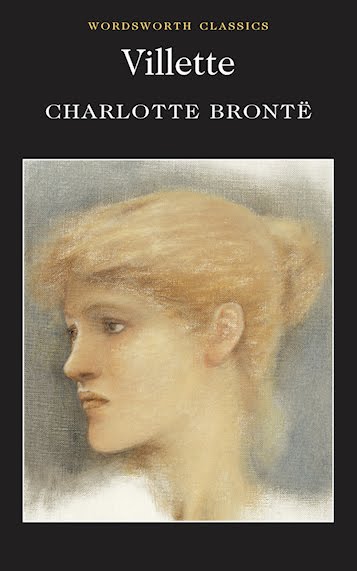
VILLETTE - MY REVIEW FOR THE ALL ABOUT THE BRONTES CHALLENGE

Villette was the only one I hadn’t read yet among Charlotte Bronte’s novels. I’m glad I’ve done it because it really completes my vision of her work. I quite liked it, more than Shirley and the Professor, but less than Jane Eyre. It is a complex, fascinating novel.
As Dr Sally Minogue, Canterbury Christ Church University College, states in her introduction to my edition of Villete (Wordsworth Classics, 1993) , it is really two novels. One encountered on first reading (false starts, ambiguous endings, double names and identities, gothic excitements and Dickensian coincidences, some romance and undoubted pain) and the other one recognizable only at a second reading.
Kate Millet in her Sexual Politics considered this novel even  too subversive to be popular.

THE STORY

(spoilers!)

Lucy Snowe, a young Englishwoman of the educated class, narrates the story of her life—in a particularly partisan and sometimes unreliable manner. She is left destitute after the death of her mysterious family and, after briefly being a nurse-companion, takes herself off on a blind, daring trip to the Continent. She goes to the kingdom of Labassecour (perhaps modeled on Belgium) and, through a series of very fortunate occurrences, manages to land herself a job and a place to live on her first night in the town of Villette. She becomes a nursery governess to the three daughters of the proprietress of a large school for girls. During her time as the bonne d'enfants, she impresses her employer, Madame Beck, with her modesty and excellent English. She is elevated to the position of English teacher, though she has no qualifications for it and has a poor command of the French language spoken in Villette. Lucy, however, comes to excel at teaching and to love it.

Dr. John Graham Bretton, a friend of Lucy’s in her childhood, also happens to be working in Villette. Their paths cross, but he does not recognize her. During this time Lucy and a student at Madame Beck's, Ginevra Fanshawe, become friends, and Lucy learns of Ginevra's secret suitors. One of them is Dr. John, for whom Lucy has also formed an attachment. Ginevra is fickle and selfish, and Lucy cannot understand how Ginevra could prefer another (the Count De Hamal) to her adored Dr. John. Meanwhile, the imperious and difficult M. Paul, a professor of literature, is paying Lucy attention, but chiefly to admonish her and instruct her about what he considers proper conduct for a young lady.

Two more friends from Lucy's childhood, Paulina Home and her father, now live in Villette. Mr. Home has inherited a title and a fortune, and he and his daughter live in fine style. Paulina (Polly), who is younger than both Dr. John and Lucy, stayed with the Brettons when a young child and formed an interestingly adult attachment to Dr. John. Dr. John, who was enamored of Polly's flighty cousin Ginevra, now transfers his affections to the seventeen-year-old.

During this time Lucy is visited by a spectral nun, said to the be the shade of a sister buried alive in the garden when Madame Beck's school was a convent. Lucy learns that M. Paul, with whom she has had several battles but has formed a friendship, was engaged to be married twenty years ago to a woman named Justine Marie. Because of debts and the unforeseen death of M. Paul's father, the two were unable to marry, and she died very young in a convent. M. Paul supports Justine's family in a house with a priest named Pere Silas. Lucy also learns that M. Paul lives quietly in two rooms at a nearby boys' college, keeping no servants.

Lucy and M. Paul become very good friends, and he calls her his sister. At one moment, however, Lucy thinks that perhaps M. Paul feels more strongly for her. He tries to convert her to Catholicism, but Lucy is a truly faithful believer in the Protestant faith of her upbringing, and becoming a Catholic for her is not possible. Though the two finally come to some agreement on the relative worth of their faiths, it is clear that Lucy's Protestantism will keep her from ever being M. Paul's wife. Pere Silas and Madame Beck counsel M. Paul that marriage to Lucy is an impossibility, and M. Paul decides he must go to Guadalupe to take care of some business interests of Madame Malravens.

Dr. John and Polly fall in love. They exchange letters, hoping to become engaged. M. de Bassompierre is against letting his daughter go, but he eventually relents. The couple marry and are happy, having many healthy children. Ginevra, formerly loved by Dr. John, is now jealous and dislikes her cousin Polly.

M. Paul and Lucy fall in love, but she is not a Catholic, and the decision has already been made for him to leave. Before he goes he is very mysterious and does not see Lucy until the night before his departure. He has procured a house for her to set up a new school so that she may be independent and wait for him to return from Guadalupe. They exchange pledges of love, and M. Paul leaves.

Ginevra has been seeing the Count De Hamal secretly. He has been visiting her at the school dressed as the spectral nun. On the night Ginevra elopes with the Count, it is revealed to Lucy that the ghostly visitation was nothing other than Count De Hamal in disguise. Lucy is relieved that she has never seen a ghost.

Lucy leaves the school and prospers at her own school while she waits for M. Paul's return. She receives an unexpected legacy from an old friend, with which she turns her day school into a boarding school. The ending of the novel is ambiguous, but it is implied that M. Paul dies in a shipwreck on his way home. Lucy lives out her life alone, at least comforted by the memory of love.

THE HEROINE , LUCY SNOWE

Lucy Snowe is a great enigma. One of the most complex and undefinable female characters of my many literary reads. Like in Jane Eyre, one of her main features is solitude, loneliness. But this is easy to recognize.

"I kept up well till I had partaken of some refreshment, warmed myself by the fire, and was fairly shut into my own room; but as I sat down by the bed and rested my head and arms on the pillow, a terrible oppression overcame me. All at once my position rose on me like a ghost. Anomalous, desolate, almost blank of hope, it stood. What was I doing here alone in great London? What should I do on the morrow? What prospects had I in life? What friends had I on earth? Where did I come? Whither should I go? What should I do?"

More difficult is to draw a definite portrayal of her . She is shadowy, so not easy to be perceived distinctively. So shadowy that her rname is only revealed in chapter 11. She herself as a narrator doesn’t easily find a way to tell us about what she really likes, thinks, wants. Who is she actually? It seems she doesn't mind to be seen as M. Paul Emanuel sees her, but she also likes being discreet as a shadow in Dr Bretton’s eyes .

“What contradictory attributes of character we sometimes find ascribed to us, according to the eye with which we are viewed! Madame Beck esteemed me learned and blue; Miss Fanshawe, caustic, ironic and cynical; Mr Home, a model teacher, the essence of the sedate and discreet: somewhat conventional perhaps, too strict, limited and scrupulous, but still the pink and pattern of governees- correctness; whilst another person, Professor Paul Emanuel, to wit, never lost an opportunityof intimating his opinion that mine was rather a fiery and rash nature – adventurous, indocile, and audacious. I smiled at them all. If any one knew me it was little Paulina Mary.”

She’s even rather unreliable as a narrator. She disguises feelings, facts and hides people’s real identities . She only unveils the truth when she decides it is time in the story. But she is painfully honest to herself and to the others as a character in the same story.
Surely she’s strong – willed, independent and passionate.Though, somewhere on line , I’ve read a review which considered her cold and unsentimental - hence her surname , Snowe. Instead , I think she is capable of conceiling and dominate her feelings which, anyway, are there deeply rooted inside her. I can’t see her as detached,  if not apparently. She’s capable of great sufference , on the contrary, and can be very sympathetic with those she likes and loves. She can also dislike and despise, but never hate.

She dearly love John Graham Bretton and is loyal, grateful and affectionate to awkward , brooding M. Emanuel. She likes Mrs Bretton, her god-mother, and M. Home,  Paulina’s father. She needs to be loved and appreciated, she longs for it, but she seems not to care, she seems to prefer to remain in the shadow.

Lucy's interior battle , most of the time, is between wanting to remain in shadow and wanting to be lit up in brilliance. Before Mme Beck's fete, the girls of the pensionat at which she is an English maitresse assemble to be coiffed, dressed and arrayed. Lucy is swept up in their activities and reflects:
"In beholding this diaphanous and snowy mass, I well remember feeling myself to be a mere shadowy spot on a field of light; the courage was not in me to put on a transparent white dress: something thin I must wear - the weather and rooms being too hot to give substantial fabrics sufferance, so I had sought through a dozen shops till I lit upon a crape-like material of purple-gray - the colour, in short, of dun mist, lying on a moor in bloom. My tailleuse had kindly made it as well as she could: because, as she judiciously observed, it was 'si triste - si peu voyant', care in the fashion was the more imperative: it was well she took this view of the matter, for I had no flower, no jewel to relieve it: and, what was more, I had no natural rose of complexion.We become oblivious of these deficiencies in the uniform routine of daily drudgery, but they will force upon us their unwelcome blank on those bright occasions when beauty should shine.
However, in this same gown of shadow, I felt at home and at ease; an advantage I should not have enjoyed in anything more brilliant or striking.

Shadows will haunt Lucy throughtout this story. She is comfortable in her "gown of shadow" , comfortable so long as it is of her own choice. She refuses to become Paulina's , Miss de Bassompiere’s,  companion maid.

“I was no bright lady's shadow - not Miss de Bassompierre's. Overcast enough it was my nature often to be; of a subdued habit I was: but the dimness and depression must both be voluntary - such as kept me docile at my desk, in the midst of my now well-accustomed pupils in Madame Beck's first classe; or alone, at my own bedside, in her dormitory, or in the alley and seat which were called mine, in her garden: my qualifications were not convertible, nor adaptable; they could not be made the foil of any gem, the adjunct of any beauty, the appendage of any greatness in Christendom”

However,  a shadowy nature imposed is repugnant to her . When Graham, the golden idol of her heart, calls her an "inoffensive shadow," she remarks:

I smiled; but I also hushed a groan. Oh! - I just wished he would let me alone - cease allusion to me. These epithets - these attributes I put from me. His 'quiet Lucy Snowe,' his 'inoffensive shadow,' I gave him back; not with scorn, but with extreme weariness: theirs was the coldness and the pressure of lead: let him whelm me with no such weight.

When she is forced to come out of shadow wearing a less misty colour, a horrifyingly pink dress. Upon going to a concert with Graham and his mother, she ‘s almost terrified:

"I thought I should not: I thought no human force should avail to put me into it. A pink dress! I knew it not. It knew not me. I had not proved it.

Without any force at all, I found myself led and influenced by another's will, unconsulted, unpersuaded, quietly over-ruled. In short, the pink dress went on, softened by some drapery of black lace. I was pronounced to be en grande ténue, and requested to look in the glass. I did so with some fear and trembling; with more fear and trembling, I turned away. Seven o'clock struck; Dr. Bretton was come; my godmother and I went down. She was clad in brown velvet; as I walked in her shadow, how I envied her those folds of grave, dark majesty!"

GOTHIC AND SUPERNATURAL FEATURES
As I wrote in another of my posts for the All About The Brontes Challenge, Gothic Brontes,  gothic elements are recurrent in the three sister's novels from Jane Eyre to Wuthering Heights, from The Tenant of Wildfell Hall to Villette (though I didn't mention Villette because I hadn't read it yet).

For example, on the night of Miss Marchmont's death, Lucy takes a storm as a portent of that event. Lucy philosophizes that the unsettled weather, coupled with news of catastrophic events in distant places, often predicts calamity at home. This Shakespearean or classical view of weather borders on ideas of the supernatural, implying that the weather and planet-wide events either predict or affect individual human activities. Storms and weather reflect the action of the book in many instances: Lucy's collapse in the Basse-Ville is in a terrible rainstorm, the coldness of the snowstorm outside enters Lucy's heart when she first beholds the growing closeness between Polly and Dr. John, and so on.
In Chapter XII, instead , an allusion to an old ghost story prefaces a gaze at the moon, a violent storm, and an important meeting between Dr. John and Lucy. The ghostly visitations of a nun  (though in the end we know their cause) in the attic and garden are meant to show Lucy's own inner fears as well as her ability to face down, bravely, what could send others into hysteria. While Brontë never crosses into the truly preternatural or magical realm (by never asserting that anything supernatural is true), it is clear that Lucy believes that these events are pertinent to the course of human affairs. These supernatural references often serve as metaphors for something unsaid but tacitly acknowledged, like Lucy's buried life or Miss Marchmont's fury at God.

CONCLUSIONS

There are so many things more  I might have said about this read but I think my posting is already too long . Such a complex, fascinating novel deserves a second and even a third reading in time as well as other reflections and thoughts.

I want to conlude my analysis sharing with you a quote from the interesting introduction to my edition.
Dr Minogue says:
“Villette will continue to disturb and subvert., not only through its revolutionary examination of female identity, but in its representation of the shifting nature of human identity, its hiddenness, the final unknowableness of one human being to another. That it is able at the same time to make the reader feel the deepest sympathy both for those who float easily on life’s surface and for those who struggle bravely with life’s painis C. Bronte’s consummate achievement.”

THIS IS ALSO ONE OF MY TASKS FOR


(Have a look at my right sidebar for the other tasks!)

17/05/2010

WHAT I HAVE BEEN WATCHING - THE BRONTES OF HOWARTH (1973)


I consider myself lucky since I've been able to  watch this old but precious production recently, a 5-part miniseries,  THE BRONTES OF HOWARTH dating back to1973. Limited budget apart, and old fashioned acting style, it has a very good script and good performances of all the main characters. I was unfamiliar with the cast , except Barbara Leigh-Hunt , who played Mrs. Gaskell and the narrator of the story, and  Benjamin Whitrow , who played Arthur Bell Nicholls, Charlotte Bronte’s husband, and whom I remember as a memorable Mr Bennet in Pride and Prejudice 1995

The series is at least partially based on the book `The Life of Charlotte Brontë (1857)` by Elizabeth Gaskell.

The story is captivating and the atmosphere of the mini series suits the personalities of these writers to perfection. The characters really come to life in this in depth look at their secluded lives at Howarth.
The use of  restrained stage actors who knew how to convey character and emotion for close-up TV work, the genuine locations (filmed at the Bronte Parsonage ; at the small quarry just above Haworth; and the waterfall and Pennine moors west of Haworth), the accurate interior shots, make it really special.
The sensation you get is just that of an extraordinary family , one who produced three world class writers. This series tries to explain the mystery of how so much talent blossomed in that little village thanks to an extraordinary set of women. It also sheds light on their tragedies that led to early deaths for all three girls and their brother. A must for any Brontë devotee.

Episode 1 THE LITTLE KING
It is especially focused on Branwell Bronte  , portrayed as the fragile, oversensitive, spoilt heir of the family. Deeply loved by all his sisters and his father, he was a poet and a painter. But he was less strong-willed than his talented sisters and became an alcohol and opium addict. His tragic tale ends in episode 4.


Episode 2 HOME AND ABROAD
Charlotte, Emily and Anne had to work in their lives. They were governesses and teachers in private houses, schools and even abroad (in Belgium - Charlotte and Emily). Their dream was running a private boarding school for young ladies in their home which never came true. We can read about these experiences in Charlotte's The Professor and Villette but also in Ann's Agnes Grey.
This episode focuses on how difficult it was, especially for Emily (who didn't fit the task due to  her poor health)  and even Charlotte at the beginning. Anne started later on  but always bore it better and more bravely.


Episode 3 DELUSION’S SONG
Both love and writing career provided strong delusions to the young Brontes. Branwell had an affair with Mrs Robinson, the lady whose children he and Ann were tutoring at home. It ended with Branwell's dismission and a worsening of his health conditions. Ann loved a young curate,  William Weightman who died of cholera in 1842 . Charlotte was in love with M. Heger who ran the school she was studying and  working  at in  Brussels with his wife.


Episode 4 REWARDING DESTINY
The three sisters's wish to see their works published becomes reality: after several refusals first Emily saw her poems printed then, Charlotte's Jane Eyre as well as Emily's Wuthering Heights and Anne's Agnes Grey  were published in 1847. They signed their novels with male pseudonyms: Currer,  Ellis and Acton Bell .


Episode 5 SILENT IS THE HOUSE
One of the characters in this final episode in the series is Mrs Elizabeth Gaskell  , Charlotte's friend and  first biographer who  helped create the myth of a doomed family living in romantic solitude. After a series of tragic events in her life (Branwell's, then Emily's and, finally, Ann's death) Charlotte sees the possibility to get some  peace and joy in Reverend Nicholls's marriage proposal, which was opposed by her father. The two got married eventually but Charlotte died at the age of 38 in 1855 - after a short illness , possibly related to her pregnancy -  after less than a year since their marriage.


I've watched and reviewed this TV series as part of my All About the Brontes Challenge hosted at Laura's Reviews. I have three tasks yet to go. I really hope I'll make it by the end of June! Currently reading Villette . 

01/04/2010

GOTHIC BRONTES

Though they lived in the Victorian Age and published their novels in those years, the three Bronte sisters share a great deal with the Romantic Age in their works: themes, literary devices and features, wild nature and tormented souls. For example, Charlotte’s Mr Rochester or Emily’s Heathcliff embody the typical Byronic hero: moody, restless, wild in manners, tormented but so attractive. The heroes and the heroines in their novels tend to be atypical, anti-conformist, unable to simply accept their duties. They are often led by feelings and passions. And all of that is not typically Victorian. The reading audience was shocked by Emily’s Wuthering Heights (1847). (I still am sometimes re-reading it: she was so brave at writing and publishing such a novel at that time)

A literary taste the three writers share is that for Gothic elements. And this is what I want to point out in this post I prepared for The All About the Brontes Challenge.

Gothic novels were very popular at the end of the 18th century (the first one was published 1764 by Horace Walpole and was titled The Castle of Otranto) and their popularity went on through the Romantic Age. Lord Byron and his friends, among whom P.B. and Mary Shelley , spent their nights together reading and discussing gothic tales and they even proved themselves at writing one , but only Mary Shelley wrote something as worthy to be remembered as her Frankenstein (1818).

Gothic novels were based on frightening characters and events and had risen thanks to Edmund Burke ’s new conception of the sublime as “horrible beauty” whose main source was fear. What is Gothic then in our beloved novels by Charlotte, Emily and Anne Bronte?


1. In Charlotte’s JANE EYRE (1847) we can recognize many  Gothic features
 Jane’s childhood terrors in Lowood school
 Thornfield mysterious nocturnal incidents
 A sense of supernatural
 The gloomy atmosphere
 Bertha’s madness
 Jane’s (apparently) unrequited love

2. The same can be said for Emily’s WUTHERING HEIGHTS (1847): Gothic features are prevailing respect to Victorian themes


 the atmosphere of the setting ( that is sinister and sublime because of the stormy, windy weather on the moors )
 Catherine’s ghost
 the dreams
 the superstitions
 the graves
 the macabre details
 the themes of death and revenge
 Heathcliff as the villain who persecutes the naive heroine (Isabella Linton, Cathy Jr)

3. To recognize Gothic features in Anne’s THE TENANT OF WILDFELL HALL (1848) is less immediate.
I read this novel quite recently, not yet a year ago. Last summer in fact. I was impressed by young Anne courage at dealing with the theme of women’s equality. Her Helen is not a silent victim, what the society of the time would have expected from her since conventions dictated submissiveness. This is why this novel is often considered the first feminist novel.
But we have to focus on Gothic details . In The Tenant there are not so many.


Certainly its wonderfully Gothic title owes a debt to the Gothic tradition. Wildfell Hall is a desolate residence in an isolated place. And this is already a typical Gothic setting. Then, Helen is surrounded by mystery in the first part. Nodoby knows much about her and her past and her being self-possessedrather secluded and surrounded by secrecy makes her the victim of local slander.
In the second part, while we read Helen’s diary with Gilbert Markham, the mystery of her past is revealed and we are plunged in a different atmosphere which is still Gothic: Helen and her son become the victims of dissolute Arthur Huntington, respectively her husband and his father. Their lives were spoilt and exposed to many risks: Arthur lost control and became a brute, especially when drunk.

This character is said to be inspired to Branwell Bronte, the Bronte family’s spoilt son, but can well recall – in some moments and only in the central part , not in his sad end - the villain in the Gothic novels who abducted, threatened, raped naive girls.
So, we can conclude saying that The Tenant of Wildfell Hall is Gothic particularly in its sense of mystery and in its portrayals of an aristocratic life of decadence and emotional brutality

Related posts on FLY HIGH & LEARN ON LINE


My students' lessons on


19/02/2010

SPARKHOUSE - RA FRIDAY AND ALL ABOUT THE BRONTES CHALLENGE IN ONE POST

Oh God, it is unutterable! I cannot live without my life! I cannot live without my soul!’

Emily Bronte, Wuthering Heights

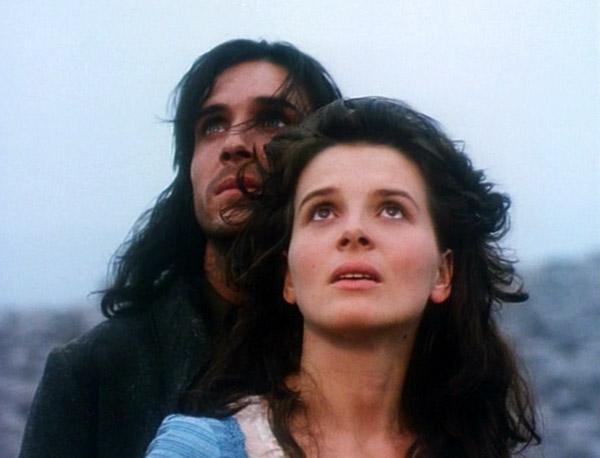
What I’ve been re-watching for the All About the Brontes Challenge is the modern-day version of Wuthering Heights , or better the 2002 BBC series thus presented. Emily Bronte ’s evergreen romance has inspired many TV and film adaptations, including Robert Fuest's 1970 film starring Timothy Dalton as Heathcliff and Anna Calder-Marshall as Cathy. In 1992 Pewter Kosminsky revisited the story with Juliette Binoche and Ralph Fiennes in the lead roles and the latest version is quite recent, 2009 . I posted about the several adaptions I’ve seen so far in A WUTHERING WEEKEND .

In this loosely –based- on modern version Heathcliff is a young working -class woman called Carol Bolton, who is in love with her middle class neighbour, Andrew. So the class relationship between Bronte's uncultured Heathcliff and the upper class Cathy has been reversed. And it is middle-class Andrew's parents who want him to leave Cathy and go to university.

The three-part TV drama is   SPARKHOUSE (2003) ,  filmed in Hebden Bridge in Yorkshire, northern England - not far from Haworth, where Emily Bronte grew up. Producer Derek Wax believed the story's themes are perennial: "The battle between passionate love and economic necessity; following your heart, or doing something expedient, or socially desirable. These questions are the same in the 21st century as they were in the 19th."

 
The storyline

• Carol Bolton is a feisty, passionate and reckless young woman who life has dealt a raw deal. She lives in poverty-stricken Sparkhouse Farm with a drunken and abusive father, Richard. Carol is determined to protect those closest to her - younger sister Lisa and her soul mate since childhood, Andrew Lawton.


(Carol and Andrew reading Wuthering Heights on the moors)

• Andrew and Carol's love is not a teenage crush. Their passion is urgent, powerful, enormous, like the landscape they share; the raw energy of the wind, the awesome loneliness of the moors. Yet all of this is in danger of being destroyed when a Pandora's Box of secrets and lies is forced open. Andrew's parents are strongly against the match and ensure that he goes away to college. Andrew is frightened by what he discovers about Carol and leaves...

• After another violent attack of her father against her, Carol runs away from home with her younger sister, Lisa,  in order to protect the latter from their father's violence.

• (After three years) Andrew has tried to forget his passion for Carol and is back to his family home married to a sweet young woman he met at university . (Parallelism with Wuthering Heights  : Catherine’s marriage to Linton)

• Carol too is back : her father's farmhand John Standring, has searched and found her in order to inform that her father is seriously ill , Carol’s rage and disappointment are unrestrainable (Heathcliff's furious reaction to Cathy's marriage)


• After the death of her father and since Andrew has also had a baby from the woman he married, Carol seeks solace with her father's farmhand, tender and caring John Standring, and works with him to protect her family (Lisa) and the farm. (Heathcliff ‘s marriage to Isabella Linton)


• But the bonds which have always linked Andrew and Carol cannot be easily cut ... as it happens in Wuthering Heights between Catherine and Heathcliff, their love will survive tragedy and even death.


(Andrew reading Wuthering Heights to his pupils)


 I loved and still love this series a lot, though  at first I was a bit disappointed because I couldn't  find as much Wuthering Heights as I expected buying the DVD in 2006.  This modern-day retelling of Wuthering Heights is a gripping  compelling story, with memorable characters and a complex plot.  Heathcliff/Carol Bolton, the daughter of an abusive, alcoholic father who molests her,  is incredibly well portrayed by Sarah Smart ( who had been Cathy Jr in 1999 version of Wuthering Heights).  Andrew and Carol, Cathy and Heathcliff , are torn apart by the upper class family of the boy and this will condemn them to unhappiness.  The subplots and supporting characters are all very contemporary with contemporary conflicts and passions. Some  viewers  may be confused by the gender-switch in the story  or disturbed by the bluntness of some scenes and dialogues. But I'm convinced , instead, that Sparkhouse  is worth seeing .

The Cast

• Carol Bolton - Sarah Smart
• Richard Bolton - Alun Armstrong
• Lisa Bolton - Abigail James
• Andrew Lawton - Joseph McFadden
• John Standring - Richard Armitage
• Kate Lawton - Celia Imrie
• Paul Lawton - Nicholas Farrell

About me and  John Standring

You've seen Richard Armitage in the pictures above as John Standring (the Isabella Linton of this story) , one of his most  touching interpretations. I must confess I didn't notice him the first time I saw this series, 'cause my attention was focused on the main hero that is  Andrew /Joe MacFadden and ... well... John  was a very sweet lovely guy but we didn't hit it off at the time! Then, when I saw Richard as John Thornton in North and South in 2008 for the first time, I came to "notice" him  and started searching for information about that unknown (then!) Mr Armitage.  I discovered he had worked in Sparkhouse but I couldn't recall him. I neither recognized him immediately when I played Sparkhouse again in search for broody Thornton! Now I would catch the glimpse of RA even with a mask on his handsome face, I bet. And I'd recognize his voice among thousands. So ... it was not love at first sight, you see! Now, I must admit, John Standring is one of my favorite among Richard's characters.

I want to leave you with three final caps....

Picture 1. Lisa Bolton (Carol's younger sister in Sparkhouse)  and John Standring (Carol's husband in the same series) - (2003)


Pictures 2 and 3

Guy  and Meg in Robin Hood 3 (2009)


Lovely couple, aren't they?