Hello and welcome to FLY HIGH, Flavia! My first question for you is, where do you get inspiration for
your stories? A kernel of truth often develops
into something more: something will happen to me in my everyday life, and when
I go to write it down, it takes on its own shape. For example, one of my
favorite short stories in All the Way to Italy came from a walk in the woods
during the summer and the sound of katydids. From there came the story What
Sings in the Night!
Do you write every day? I’d love to say yes, but the truth is, everyday life very
often gets in the way of writing every day! I find that there are days
(especially when traveling, or in a new place) when ideas and thoughts demand
to be written down almost constantly, and that’s one of the reasons I carry a
notebook around with me everywhere I go. But there are stretches of time when
the inspiration is much less present, and I try not to force it—or else it
would stop being fun!
In today’s tech savvy world, most
writers use a computer or laptop. Have you ever written parts of your book on
paper? This ties in well with the previous
question—the truth is, I have a very real obsession with notebooks and pens. I
adore picking out new ones, and I always have a notebook with me, and usually
also a pen with crazy-colored ink. I jot down random sentences or thoughts that
I can then go back and flesh out properly, and that’s usually when a laptop
comes in handy!
Sophia
Loren once said: Credo in sogni, sogni diventano realtà—I believe in
dreams, dreams become reality. This idea resonates with me, and it is one of
the themes of my new book “Dreaming Sophia”. It is a novel about Italy and
weaves together many strands of Italian culture in a mixture of fantasy,
romance, art, and history. “Dreaming Sophia” is also about turning fantasy and whimsy
into tangible realities. I have always believed if you can dream it you can do
it!
Did you pick the gobbo? Unlikely but probable if you’d lived in Calabria, southern Italy one hundred years ago when people credited the hunchbacked creature with magical power.
TheInheritanceis set from 1897 to 1913 in Calabria, a region in southern Italy. It tells the story of Caterina, an atypical peasant woman who challenges social norms and the tragic chain of events her determination to live a life of her choosing ignites. Authenticity makes historical fiction come alive and thegobbo appears in Chapter One. A peasant mother is in thethroes of a difficult childbirth and Mafalda, the village midwife, wears the talisman on a piece of twine around her neck and entreats it to grant the baby a safe delivery.
What Keeps Your Home Safe?
a) surveillance cameras
b) a walled compound
c) lavender
I doubt you picked lavender. An ancient herb used by various cultures to treat wounds, headaches and depression, Calabrian society at the time of TheInheritance also believed lavender shielded against evil.
Back to work, which in my case is back to school, of course. Honestly, I can't remember what it meant for me as a student. My memories, influenced by the nostalgic mood typical of the middle-age syndrome, makes me recall my teenage self as longing to go back after an endless boring summer. But, perhaps, I was nothing like that. Maybe I was just like them, my half-resigned, half-bewildered, totally "I'm happy but I mustn't show it" students. Poor kids (they are not exactly kids, but they are to me)! What do we want? Do we want them already alive and kicking after coming back from the summer holidays country, where night is day and day is night? You know, jetlag can be tough to deal with.
I have been having a nightmarish time these days with some of my best colleagues and my best students. Everything we had taught our pupils and we strongly believed in was betrayed.
We have always insisted in teaching them that rules exist and must be followed to guarantee everybody's rights.
Together we have witnessed how many people just don't share that fundamental belief.
One of my colleagues wanted to share with our sweet, very disappointed, hardworking students (girls) these words by Miriam Mafai (Italian journalist, writer, politician) which I totally agree with and I'm going to translate for you all:
CONQUISTARE IL SUCCESSO SENZA TRUCCHI NE' COLPE To achieve success without tricks nor faults
Corri, bambina, corri, tu che hai buona la testa, le gambe e il cuore. Run, little girl, run, you with a good head, good legs and heart Corri senza rallentare davanti agli ostacoli, alla stanchezza, alla nostalgia (che pure talvolta ti coglie) Run without slowing down before the obstacles, the tiredness, the nostalgia (which yet sometimes you feel) del tempo della lentezza e della protezione. for the time of slowliness and protection
Edith Bruck won the Premio Viareggio Narrativa 2009 for «Quanta stella c'è nel cielo». There's no grammar mistake in the title. It was just meant to sound "How much star is there in the sky" in the quoted line of Sàndor Petöfi's ballad. Anita (Eline Powell) , who's only 16, has just the great Hungarian poet's lines to warm her heart and little else sweet left in her mind. She keeps so many ripping memories inside herself, memories nobody wants to listen to. She survived the concentration camp, is beautiful and sensitive, life trials have tattoed her soul forever. She's running away from a Hungarian orphanage to join her aunt, Monika.
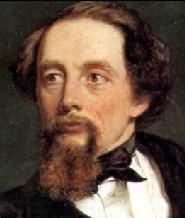
Today is Charles Dickens's birthday. He was born on 7 February 1812. I'm posting this article to celebrate the incredibly talented story-teller on a very special date and to let you know the man behind the books a little more.
Would you believe such a successful, rich and widely appreciated man suffered from unhappiness? That he pined for romantic, passionate love all his life long? Apparently he did. He tried to escape his dissatisfaction and unhappiness travelling and, especially, writing.
This piece by Claudio Taccucci, was originally published on Tiscali online paper in Italian. I asked Mr Taccucci permission to translate his article and post it here at FLY HIGH! to share it with all of you who, like me, are interested in the great English novelist. He gladly and generously accepted, so here it is for you to enjoy.
Caelum non animum mutant qui trans mare currunt . Those who go to sea may change their horizon, not their soul. Charles Dickens had a
tormented soul and when he was haunted by his own predicaments or unhappiness, he escaped. If he was in his
London house, he went out at night and roamed the city for hours, going back only in the morning. Nobody will
ever know what he actually did in those hours, which he justified as a quest for
inspiration for his novels. When, to avoid melancholy, his walks were not
enough, he left on trips. He travelled all over England with a friend, stayed
for long periods in Paris or sailed for the States on self – promotion tours.
After reading Tinney Sue Heath’s historical fiction novel, A Thing Done,
set in 14th century Italy , I thought that it is curious and stimulating to get
to know how people living in distant countries see your own. This is why I
wanted to interview the author and ask her the reasons for her loving my
country, especially medieval Italy, so
much. Giveaway! Read the interview, then take your chances to win one of the two e-book copies of A Thing Done. (see the rafflecopter form below the post)
First of all, welcome to Fly High,Tinney, and for accepting to answer my
questions.I’d like to start asking you,
what is the fascination of Dante's Italy to a person with such a different
background? For us Italians it is compulsory to study Dante Alighieri and read
his “Divina Commedia”at high school.
But you? How did you come to discover the greatestItalian poet, his work and his Florence? Thank you. I'm delighted to be here. Your question made me smile, because when I
first learned about your blogs, I wondered what attracted an Italian to Jane
Austen! I first encountered Dante in
high school. In my case it was not because
everyone studied his writings, but because I was fortunate enough to read them
in a Great Books class I had chosen to take.
There I also read Boccaccio and Machiavelli. I loved the art of the Italian Renaissance,
and my tastes in opera and other classical music also tended toward the
Italian, but it was Dante who focused my interest on pre-Renaissance Florence
and Tuscany. After all, it seems he put
most of his neighbors in the Inferno, and he made 13th century Florence
sound like such an interesting place.
I have been asked to explain why I chose Tuscany for the
setting of the start of my novelSign ofthe Times.
To be honest, it wasn't a difficult decision. I love Italy
and all things Italian. I had rented a villa in 2003, with seven friends, in
Bibbiena, which features in the novel. At the time, it hadn't occurred to me
that I would use it in a novel, and indeed I wasn't even writing back then.
But when I sat down to start writing Sign of the Times, and
chose my first character, Holly, and made her a travel writer, it seemed
instantly clear to me where she should research her next book.
Bibbiena is a lovely little village, in my mind, very
traditional. It's close to Arezzo, which is briefly mentioned also. We stayed
at a beautiful villa called Casa Cardinale.
As it turns out Holly's B&B where she stays is a mix of this villa
and a hotel I stayed in in Positano. Both times the owners virtually adopted
me, as they were so delighted I spoke fluent Italian.
From Casa Cardinale we could see up the hillside to other
villas. One of those villas was the setting for the Italian wedding in the
book.
Many of the scenes in the book are those which I actually
experienced: going to the market place, watching the wizened old men playing
chess outside a café, going to the bottega
where Holly deliberates over the prize-winning olive oil and which wine to
buy. The fact that shopowners and locals alike, knew who we were, happens to
Holly also.
If you don't know who Antonio Tabucchi was, read this short bio note HERE. However, he was a free man and a great novelist. Today he died in Lisbon, a city he loved as his second home.
I'm not going to say much about him. I'll just use his words to remember his commitment
"Democracy isn't a state of perfection," Tabucchi said. "It has to be improved, and that means constant vigilance."
And also:
“Maybe I’m not happy about what’s going on in Portugal, admitted Pereira. Senhora Delgado took a sip of mineral water and said: Then do something about it.” (Pereira Declares)
Well, Antonio Tabucchi was someone who always ... did something about it, all his life through. Italian politicians know that and I really hope they won't say a word on occasion of Tabucchi's death. They owe him the respect of silence.
North and Southby Elizabeth Gaskell has its first Italian translation at last! It was published by Jo March Agenzia Letteraria in November 2011. I'm proud to own a brand new copy thanks to the publishers, which I soon added to my Gaskell shelf, and I'm proud to introduce you the translator of this amazing classic novel: Laura Pecoraro. You know how much I love this work and how much I wrote about it (and about the TV adaptation and a few sequels as well) both here on FLY HIGH and on LEARN ON LINE. I actually dreamt of translating it myself - but never felt quite good enough - because I thought it was so unfair Italian reades couldn't enjoy such an interesting literary work. This is why I'm really grateful to the publishers and the translator for their efforts. Not for myself, of course. But for the millions of potential readers out there. I hope they won't miss the chance!
Here we are, then. Meet Laura Pecoraro. Read our chat about Nord e Sud, its themes and characters, and especially about the difficult journey toward a good translation. Enjoy!
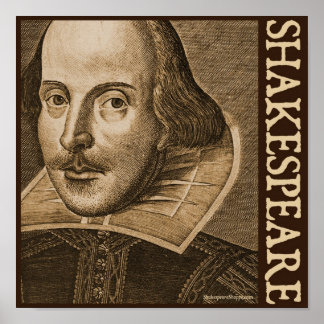
It has been suggested that Shakespeare may have visited northern Italy as some of his plays show a detailed knowledge of local topography of certain towns in that area. Shakespeare produced a number of plays with an Italian background, from his earliest 'The Two Gentlemen of Verona' to one of his last, 'The Tempest'. In total six of his plays all or partly took place in Italy. Italian literature was so widely read in the society in which Shakespeare lived that it would be surprising if he did not have knowledge of the Italian language. Either Shakespeare visited the north of Italy or he got his information from an Italian living in London. There is no evidence that he came here, but it is very likely that he met John Florio, an apostle of Italian culture in England, tutor to Shakespeare's patron, Henry Wriothesley, the Earl of Southampton.
You know I particularly love Elizabeth Gaskell and I've often written about her works and their adaptations. Just click on the tag Mrs Gaskell or North and South at the bottom of this post, to get an idea. I always teach about her to my last year students, reading Mary Barton or North and South with them. Why am I mentioning her again? Because I've just finished reading an excerpt of the first unabridged Italian translation of her North and South that will be soon published by Jo March Edizioni. (HERE)
North and South appeared as a twenty-two-part weekly serial from September 1854 through January 1855 in the magazine Household Words, edited by Charles Dickens. So it was rather time: 1855 -2011.
The majority of Italian readers still have to discover Elizabeth Gaskell and, especially, her Margaret and Thornton. So I'm so incredibly happy for this next publication, that I wanted to share with you, whatever language you speak.
A new wave of Italian crime fiction is hitting the UK. What is there about Italian contemporary crime fiction which makes it so popular in the UK and the English-speaking world? I am reading this interesting article about how popular Italian crime fiction writers are in the English-speaking market. It is an interview with English translator Howard Curtis, who specialises in translating Italian crime writers into English (from Speak Up Magazine)
Italians like this genre because crime writers tell the truth and readers are looking at the truth of their society. Maybe they look for the truth in these books because they get a lot of lies or misconceptions from their media or from their press and you can't always know exactly what's true and what's false. Crime writers usually dig deep into society to search for the truth.
Paola Mastrocola is first of all a teacher, then a successful writer. Like me, she teaches in a Liceo Scientifico - though she teaches Italian and Latin, not English. Like me, she loves and has always loved her job. Just like me, she is more and more disappointed with what teaching teenagers has become. She says: "Do you remember that poor Japanese soldier remained shooting the air because he had not been warned that WWII had finished? Here I am. I am the last one who goes on teaching our own language, Italian. Why didn't they tell me they've decided it is useless"? This is just the beginning of her long, heartfelt, well-written essay about school nowadays. School is useless, we teachers are useless, hence we'd better be off. Provoking title, "Togliamo il disturbo" ( we'd better go and stop bothering), "saggio sulla libertà di non studiare", an essay on the freedom not to study.
A clue? The answer is ... by the dreams, ideals, passion, courage, sacrifice and blood. Where have all of them gone now? Not the blood, of course. That's something I can gladly do without. But what about the Italians' dreams, ideals, passion, courage?
Italy turns 150 today. Happy birthday, my beautiful spoilt , offended country. Pity I have to use the past tense to say you WERE great. A great country, esteemed and admired by all. Do we have to go back to the Renaissance for that admiration? Even then, there were divisions and violent clashes. So, what? We still had so much to teach and offer to the rest of the world. We WERE a great country of great men like Michelangelo, Leonardo, Raffaello, Tiziano, Caravaggio (not in the right order, I know)
For those great men, there are many people loving Italy still nowadays, for its wonderful patrimony of Art and natural Beauty. I'm sure of that, I'm among those many. I deeply love Italy. But it is like loving a brainless, shallow, beautiful woman. You get bored after the first moment of overwhelming passion.
Sadly, there are people who say they don't want to join the rest of us in celebrating our country's b-day (they even dream a secession), most of them living in the North, and a gloomy minority in the South.
When Edda Ciano landed on Lipari shores, sentenced to seclusion, it was September 1945. Five months after her father, Benito Mussolini, had been caught and killed by partisans (and hanged by his feet in Piazza Loreto, Milan) and 21 after her husband, Galeazzo Ciano, had been accused of betrayal and executed by her own father. She weighed 42 kilos, didn’t eat anything…she was there with the intention to let herself die.
To her Leonida Bongiorno - a partisan and a communist belonging to a strong tradition of anti-fascism, WWII survivor and Chief of Lipari Communist Party - would be, in the months to come and for the rest of her life, her saviour and her true love. Everybody around them warned them, they had no future , but they were tied by what should have separated them, they were united by their respective wounds, by their passion and by the illusion that love would help them to win adversities. Leonida risked his political credibility and his relationships with friends and family for his love for Countess Ciano, daughter of the man he had so deeply hated and fought against. He loved her against all odds and against common sense when she even boasted she had remained a fascist.
I was very curious to see how the British - British TV - represented Italy in this crime series. I usually don't mind stereotypes and picturesque depiction of my complex, beautiful country so much, I'm rather used to them. Italian TV itself tends to depict Italy always highlighting its defects and never its qualities, so much that I avoid watching the news and in general TV programmes, I've done that for a couple of years now. Too depressing. I prefer seeing films and DVD coming from abroad, especially British TV drama.
Set in and around Rome, and based on the best-selling novels by the late Michael Dibdin, this mini series in 3 parts features many of the combined attractions of Italy and the Dibdin novels – thrilling investigations, fun, warmth and beautiful people.
I've been watching this 4-part Italian costume drama, "Il sangue e la rosa" (The Blood and the Rose, 2008). I can't say I'm fond of Italian TV drama, but I can't say I didn't like this series at all either. It was based on a good script, a good blend of comedy and drama set in 19th century Rome. Beautiful settings and costumes, intriguing plot full of the many traditional features of period drama. However, there was something definitely disturbing, something I remember I have already discussed on this blog while reviewing other Italian TV series ( David Copperfield, Il Falco e la Colomba).
I can't bother the fact that often in Italy you can be "something" or "someone" even when you do not possess the indispensable knowledge, talent or competence . Is it the same in your country? Better I'll stop here, since I've always avoided serious reflections about the state of my country Fly High, especially because it is my escape from sad reality. But this is what I won't avoid saying today: it seems that to be an actor or an actress in Italy you don't need to be talented or at least decent at acting .
You can just be a popular face from "Big Brother" or other TV reality shows, a very handsome bloke, a very gorgeous young woman... that is enough to be in a cast . "Il sangue e la rosa" stars good actors and actresses such as Giancarlo Giannini, Franco Nero, Virna Lisi , Franco Castellano, Martine Brochard but also several good-looking "dummies" rather improbable as actors or actresses . Their elocution, the way they deliver their lines, is often pathetic. Their facial and body language quite static.
This lack of competence and talent is something I just can't stand. Not only in the acting field, but also and especially in crucial fields like politics, health care, education. I claim the right to have the right person in the right place.
This is not what I exactly wanted to write about, but this is what came to my mind reflecting on the bad acting of part of the cast . Fortunately the acting standards of the other part were high. Pity is ... It is like mingling "il diavolo e l'acqua santa", we usually say. It means "mingling the devil with holy water".
Anyhow, I got to the end of it ,6 hours, to see how the story developed and ended and it was amusing, intriguing end even gripping at times. If only those dummies had gone to drama school at least for some days in their lives! Watching the good actors and the dammies together was something like zapping from a good period drama to the parents' recording of students' school plays.
Ok. Sorry for being so blunt, I hate when I have to be that critical. And you will wonder why I persist in watching Italian period drama if I'm well aware of what it is like... Because from time to time I've found something good and I've been happy and proud. Hope is hard to die.
But as I told you, the script was not that bad. Light, hilarious most of the time, but also full of twists and turns. The plot is quite complicated but the main level of the narration focuses on the 3 protagonists. In fact, a triangle of friendship and love is at the heart of the story: in the small town of Cave (not far from ny own town) the charming young daughter of the host of the place, Isabella Malvolti (Isabella Orsini) spends her time between forbidden books and his only best friend, Rocco (Gabriel Garko) , a handsome young worker who has always been in love with her.
Rocco tends to be a rebellious leader, ready to risk his own life to defend the weak, he is restless and passionate. He will start getting in troubles with the law. Giulio Mancini (Mirko Petrini), instead, arrives at Cave with his mother Camilla (Martine Brochard). They are from a noble family but they have to hide themselves as outcasts since their respectively father/husband, Count Umberto Mancini (Franco Nero) , died as a "carbonaro" throwing leaflets stirring to rebellion from the top of a tower.
An indissoluble bond of friendship and love starts between Isabella, Rocco and Giulio: the two young men are loyal friends to each other but both in love with Isabella, who is torn between her close friendship and love to both . The 3 will meet again in Rome at the beginning of the 19th century and will have to face many hard experiences, misadventures and sorrows. Isabella will have to make her choice in the end but it won't be easy.
Watch the trailer just to have an idea of the atmosphere in this series.
Last week's guest at My Blogger Buddies weekly event was Laurel Ann at Austenprose. Did you miss my interview? I hope you didn't. Laurel Ann generously decided to give away two Austen based books the winners could choose from a rich and intersting list of titles.
The two lucky winners are
1. Meredith
2. Alexa Adams
Congratulations!!!
Could you e-mail me back picking up your favourite title from the list and adding your address?
Thanks Laurel Ann for taking the time to answer my questions, for being my guest and for this great giveaway!
2. A TRIP TO A NEO - GOTHIC CASTLE
(Castello Massimo di Arsoli - Rome)
Yesterday it was a warm sunny spring Sunday and in the afteroon I went on a very pleasant trip, to a small old town nearby, surrounded by green mountains and towered by an old renaissance palace later on re-stylished as a gothic castle in the 19th century. It is an impressive place, owned by the heirs of an ancient noble Italian family, the Massimos. It is usually closed but yesterday it was opened to the public with free entrance. How could I miss the chance? Many thanks to the dear friend who invited me to join her there. It has been a unique picturesque afternoon walk.
It'd the perfect location for a period movie. Any idea? Have a look at the pictures and at the official site ... which title would you suggest?
3. MANSFIELD PARK AT MY JANE AUSTEN BOOK CLUB
I've posted the solution of the game on Edmund Bertram's timeline and some notes I've been preparing for our next meeting on Friday. Mansfield Park is a controversial novel, maybe one of the least loved among Austen's works, anyhow very interesting each time I happen to leaf through it. I've listed some of the themes I'd like to discuss with my mates. Have you got any other suggestion?




.jpg)