Showing posts with label interviews and guest post. Show all posts

11/07/2018

THE STAGGERING REALITY OF HUMAN TRAFFICKING: AN INTERVIEW WITH RACHEL LINDEN, AUTHOR OF BECOMING THE TALBOT SISTERS


In Becoming the Talbot Sisters (Thomas Nelson), author Rachel Linden hopes to bring a greater awareness to issues important to women around the world and encourage them to live what she describes as “every day brave.”


Becoming the Talbot Sisters tells the story of estranged twin sisters who live very different lives on opposite sides of the world but are drawn to rebuild their relationship in support of one another as they face challenges ranging from miscarriages to sexual assault to career woes. The sisters’ stories draw from many aspects of Linden’s own life as she shares in the interview below.

An author normally works some of herself into her novel. How much of Becoming the Talbot Sisters reflects your own life?

So much of the book reflects my own personal experience! The main themes – women having courage to face infertility and miscarriage as well as sexual exploitation and trafficking – are all very personal for me. I lost my first child to miscarriage, so I identify deeply with that thread of the book. I also worked with a faith-based organization in Europe for seven years, focusing significantly on women who experienced trauma and exploitation, so that theme is one I am very passionate about. The locations in the book are also dear to my heart. I set the book mainly in Budapest where I lived for five years. Parts also take place in Sarajevo and several other fascinating locations around central Europe, all places I enjoy and want to share with readers.

As for the sister-relationship aspect of Becoming the Talbot Sisters, much like Waverly and Charlotte, my sister and I are very different and live geographically far apart. However, we have a harmonious relationship and have grown in friendship more and more as we’ve gotten older unlike the sisters in the book.

19/06/2018

FAITH AND FEARLESSNESS, A NEW SEQUEL TO GASKELL'S NORTH AND SOUTH - AUTHOR INTERVIEW


Faith and Fearlessness is a new, stand-alone sequel to Elizabeth Gaskell’s masterpiece, North and South, one of my best favourite novels ever. I’ve read a few sequels and rewrites before, but when a review copy of Faith and Fearlessness was offered to me, I was immediately triggered by its premise, which made it different from the ones I had read which took the narration over where Mrs Gaskell interrupted it or proposed a variation to the original plot. Actually, at first, that same premise had me both puzzled and curious to discover more. Why puzzled? The book blurb immediately revealed that John Thornton, the Victorian mill owner protagonist of Gaskell’s novel, is left a broken man after the death of his wife Margaret and a new love interest is on his horizon. Now, that took me a while to digest, but when I started reading the book and I found myself back to Manchester (Milton in North and South), years  had  passed from Mrs Gaskell’s lovely ending and everything sounded and looked plausible thanks to M.G. Thomas‘s writing style, which was captivating and fast-paced.
 
Ready to discover more about Faith and Fearlessness? Here are my questions to the author and her answers. If you have more questions for her, please leave them in the comment section.

18/06/2018

BOOK UNDER THE SPOTLIGHT: THROUGH A BROKEN HEART BY COLLEEN MEISSNER


Five Questions to the Author

Hello and welcome to FLY HIGH, Colleen.  My first question for you is ... How did you do research for "Through a Broken Heart?

This book was written primarily from my own journey and education. My education which includes a Master’s in Clinical Counseling, has helped me to understand why people think and act the way they do, why they repeat patterns – like dating the same type of guy over and over again or why they avoid relationships all together.

07/07/2016

INTRUSION BLOG TOUR - AUTHOR'S GUEST POST: ADVICE YOU'D GIVE TO PEOPLE LOOKING TO PUBLISH SHORT STORIES

The world of the short story is a varied and fascinating place right now. Experimental collections, flash fiction, connected stories that read like novels --all these can be found on the shelves of bookshops and libraries. A check of current on-line journals will show that published stories can be complex prose poems or traditional narratives with conventional plot, characters and story arc.  There’s a place for every kind of story.
Where does the novice start? First - read.  Read stories in new collections, on-line zines and literary journals and decide if your particular style of story fits comfortably anywhere.  It’s important to read at least one edition of a journal before submitting.
Then- check guidelines and submission periods. Some respected literary journals have a short submission window.  Submit outside of that time frame and your carefully crafted story will be ignored.  If there is more than a token fee to submit, think carefully before paying it, particularly if the journal does not pay writers. (The same applies to competitions: if the prize money is small it may not be worth paying a hefty fee to enter.)  
The market has shrunk in recent years for women’s fiction but some magazines still consider unsolicited submissions.  Try: – My Weekly, Woman’s Weekly, Take a Break, Best and Yours.

12/06/2015

ELIZABETH FREMANTLE, WATCH THE LADY: TUDOR ENGLAND, POETRY AND LOVE

Tudor England is a great setting  for an historical novel. I've asked Elizabeth Fremantle, bestselling author of three intriguing novels set in that era,  a few questions to discover more of its allure.

WATCH THE LADY is set in the Elizabethan Age. What is the allure of Tudor England on modern readers?

It’s hard to say why the Tudor period has captivated modern readers so much more than other periods. I am personally fascinated by the state of political and cultural flux that came with the Reformation and the exploration of the New World, which coincided with an unprecedented half-century of female rule. England was late to the renaissance but in the late sixteenth century with writers such as Spenser, Sidney and Shakespeare there was a great literary flourishing that continues to have relevance today.

What is the most intriguing aspect of that age to you,  instead,  both as a historical researcher/writer and a reader?  

My particular interest lies with women writers and this was the time when they began to take up their pens. My first book QUEEN’S GAMBIT is about Katherine Parr, the last wife of Henry VIII, who few know was one of the first women to publish an original work in the English language. The period is filled with intriguing and powerful women whose stories continue to captivate modern readers, some of which, like Penelope Devereux’s in WATCH THE LADY, have been forgotten by history and merit re-expooration. 

Writing historical fiction must be challenging. How much do you work on research and how important is historical accuracy to you?

In my novels I like to remain faithful to the historical record but I am not under the illusion that it is possible to achieve absolute accuracy when dealing with the distant past.  Often history contradicts itself, in differing points of view, and the truth remains elusive but there is usually a framework of known fact that I will work to.

12/05/2015

WHAT IF SACRIFICING YOUR DREAM WAS THE ONLY WAY TO GET WHAT YOU REALLY WANTED? TAMERA ALEXANDER, TO WIN HER FAVOR - INTERVIEW + GIVEAWAY

In Tamera Alexander's riveting new novel, a young woman caught in a marriage of convenience must sacrifice everything to save her home, her land, and the people she truly loves. 

Seattle: Against the backdrop of one of the most turbulent times in American history, the post-Civil War era, one woman struggles against prejudice, injustice and suffocating conventions of the 19th century to pursue her dream. Tamera Alexander's To Win Her Favor , the second stand-alone novel in the Belle Meade Plantation series, is already receiving high praise. According to Library Journal, "Strong characters, a sense of the times and the themes of love, friendship and the importance of loyalty and determination make To Win Her Favor a triumph."

Maggie Linden lost nearly everything in the Civil War - including most of her family. She's about to lose her stables and land at Linden Downs and her thoroughbred racing hopes as well. A gifted rider in a world where ladies never race, Maggie is determined that her mare, Bourbon Belle, will become a champion. Indeed, her only hope of saving Linden Downs is if the horse takes the top purse in the inaugural Peyton Stakes, the richest race ever run in America. To give his daughter a chance, Maggie's wily father makes a barter. But his agreement includes one troublesome detail: Maggie must marry a man she's never met - a man she never would have chosen for herself.

An Irishman far from home, Cullen McGrath left a once-prosperous life in England because of a horse-racing scandal that nearly ruined him. He's come to Nashville for a fresh start, hoping to buy land and begin farming, all while determined to stay as far away from thoroughbred racing as possible. With "No Irish Need Apply" signs greeting him at every turn, Cullen finds starting over proves much more difficult than he wagered. When Maggie Linden's father makes him an offer he shouldn't accept, he finds it impossible to refuse.

16/02/2015

JEFFREY PERREN, THIS WRITER'S LIFE - MEET THE AUTHOR OF COSSACKS IN PARIS


Up before dawn — tea for me, coffee for the wife, pet the dog. Check emails, correspondence with beta readers, and miscellaneous.

So far, that doesn’t sound very exciting. But that’s the business side of things. I leave as much of that as I can to my publicist — remembering how blessed I am to have one who loves my work.

Later, write or edit the latest story. It will be a re-telling of the William Tell legend and later a trilogy set in the Age of Discovery.

02/10/2014

HAND OF FIRE BLOG TOUR - INTERVIEW WITH JUDITH STARKSTON + GIVEAWAY


First of all welcome and thanks a lot for accepting to answer my questions, Judith. It’s a great pleasure to have the chance to present you and your debut  novel,  Hand of Fire, to my readers. How excited are you on releasing your first book?

It’s great fun to see the positive reaction to my book. Such a long journey to get published and now I feel proud. My book launch at the Poisoned Pen Bookstore was fabulous and we sold twice as many books as the staff had predicted. How thrilling is that!

My first question may be quite tricky, but let’s try. What’s the difference between a good historical fiction novel and a brilliant one?

I’m so glad you asked. According to Helen Hollick, editor of Historical Novels Review and author of Forever Queen,”But what is the difference between a good historical novel and a brilliant one?

I suggest you read Judith Starkston’s Hand of Fire and you’ll discover the answer." I would never argue with a pro like Helen and any other answer would take a few hundred pages!


22/09/2014

GENTLEMEN OF PITCHFORK - INTERVIEW WITH AUTHOR KAMIL GRUCA

First of all welcome and thanks a lot for being my guest at FLY HIGH!, Kamil. It’s a great pleasure to have the chance to present you and your new spellbinding novel, 'Gentlemen of Pitchfork,  to my readers, since they are always so interested in historical fiction!  Thanks also for granting them five copies of your book in the giveaway contest attached to this post (see rafflecopter form below)

Let’s start briefly introducing your book.
The book tells the story of three English knights, who joined Henry Vth in his campaign for the throne of France.

How would you describe the main heroes  of your novel?  Let’s play with 3 adjectives each.
Lord Arthur: combative, inspired, slow-witted Sir Robert: bright, observant, overeducated Sir Ralph: experienced, disillusioned, womanizing

Are they inspired to literary characters you admire?
Probably more than I would like to admit, but I couldn't honestly point at any specific one I had in mind while creating them. Some of the characters were however based (partly) on people I personally know from reenactment groups – and they are well aware of that.

How did you come to be so interested in English Medieval  history?
As a boy I had my head filled with the knight’s tales. The first originated from fantasy (my mother read Lord Of The Rings to me when I was 5). Then I joined a history reenactment group at the age of 14. The group initially reconstructed English archers from late XIVth and early XVth century. My senior collegues were reading everything they could find about English medieval history (they had good general knowladge of history as well, a lot of them are archealogists and historians). But why  they chose that particular period and unit, I don't really know. I just accepted it as my reality. That’s how it all began.

03/09/2014

AN INTERVIEW WITH SARAH SUNDIN, AUTHOR OF IN PERFECT TIME


All of your books are set during World War II - what is it about that era that draws you in?


It was a time of such intensity, of great upheaval and of great unity, a time that showed humanity at its most cruel and depraved - and at its most noble and heroic. Ordinary men stepped out of their ordinary lives and discovered they could do extraordinary things. Women tried on exciting new roles, learned new things about themselves - and yet remained ladies. It was a time of drama, daring and romance.

What is the overall spiritual theme or message in this new book, In Perfect Time?

Both Kay and Roger feel they don't deserve God's gifts. Kay feels unworthy of God's love and His mercy. While Roger has accepted God's forgiveness, deep inside he doesn't believe he deserves God's grace, His blessings, His gifts. Both Kay and Roger learn that God doesn't give to us because we're good, but because He's good. They can't earn His gifts - and they should wholeheartedly embrace the gifts He gives.

27/08/2014

WRITING AND DREAMING SCOTLAND - INTERVIEW WITH GLEN CRANEY, AUTHOR OF "THE SPIDER AND THE STONE"

If you follow FLY HIGH!  on blogspot or on facebook, you must certainly have noticed I'm (kind of ) hooked with Scotland and  Scottish heroes at the moment. This is why I was glad to hear from Glen Craney, author of "The Spider and The Stone", when he proposed me to review his historical novel set in 14th century Scotland. 
I've started reading his novel and I've invited Glen to tell us more about it,  his love for Scotland and for historical fiction.
He has generously granted the readers of this blog 10 ebook copies of the book! You are all invited to take your chances to win one of them. Check the book giveaway contest below the interview. Good luck!

Welcome Glen! I’m really glad you accepted my invitation to talk about Scotland and "The Spider and The Stone"  with me.
Thanks to you for the invitation, Maria Grazia.

Scotland is the setting of your historical novel. I’m quite hooked by that amazing land and its stunning wilderness and its castles, what about you? Have you been there ? Why did you choose it as your setting?
I’ve traveled to Scotland three times, and have some ancestral roots there. I often get inspiration for my books in dreams. About ten years ago, I awoke from a particularly vivid one in which I was a mounted knight fighting a duel near a stream with a black-robed hag who wielded a sickle. In the midst of this death struggle, the dream shifted to a photograph of me standing with six other knights around a seated king in a pose of celebration. Below the photograph, a caption read: "Americans aid the King at Bannockburn."

24/08/2014

DISCOVER HEALING IN THE SEARCH FOR TRUTH - AN INTERVIEW WITH ELISABETH GIFFORD, AUTHOR OF 'THE SEA HOUSE'


About the book 

What happens when you bring the truth of who you are and where you’ve been into the light? In her impressive debut novel, The Sea House (St. Martin’s Press/April 15, 2014/ISBN: 978-1250043344/$25.99), author Elisabeth Gifford introduces readers to characters who are forced to dig up the pain and secrets of their past in order to let the fresh air of faith and grace purify and heal the broken places in their heart.

Gifford was inspired to write The Sea House after coming across a letter in The Times archives from 1809, in which a Scottish schoolmaster claimed to have spotted a mermaid. Weaving the ancient Gaelic myth of the selkies into her story, she has created a sweeping tale of hope and redemption that is an ode to the healing readers can find when they acknowledge the truth about themselves.

Your new release, The Sea House, is a fascinating historical mystery that was born out of a letter you found from an old edition of The Times. Can you tell us about the letter?

The Sea House is based on a real letter written to The Times newspaper in 1809 by a Scottish schoolmaster, reporting a mermaid sighting. There were lots of mermaid sightings up to 200 years ago around Scotland and even a recorded mermaid funeral in the islands. There were also persistent legends of selkies, seals who could take off their sealskins on land to become human. I thought these were simply old fairy tales from a more credulous time, but it may be that these sightings and legends were connected to something very real. For thousands of years the native Sea Sami used to kayak down to Scotland from Norway using Eskimo technology. Their sealskin kayaks would become waterlogged after a few hours and lie just below the sea surface looking like a wavering tail. On land, they removed their sealskin jackets and became human — just as described in the legend of the selkies. Some must have married locals and stayed on the islands, giving rise to certain families such as the MacOdrums, who were said to have come from the seal people.

20/08/2014

IS A PARENT'S JOB EVER REALLY DONE? AN INTERVIEW WITH AUTHOR DEBORAH RANEY ABOUT HER "HOME TO CHICORY LANE"

Home to Chicory Lane 

Deborah Raney writes a story that examines how the love of our family can help us weather life's storms. The first book in the new Chicory Inn series introduces us to Audrey Whitman, a mother who has launched all of her children into life and now looks forward to fulfilling some of her own dreams during her empty-nest years. However, not all of her children are ready to stay out of the nest quite yet.

Raney has beautifully captured the tenderness - and turmoil - of family life in her new release. It was easy for her to do. "We have four grown children and five grandchildren . . . so far!" Raney says."So, as you can imagine, family is extremely important to us. We're both close to our families, and all of the good, the bad, the ugly, the wonderful of being part of a family, went into this series."

Readers of Home to Chicory Lane will meet all of the Whitmans, including Audrey and her husband, Grant, who are turning their beloved family home into a bed and breakfast. As Audrey works toward opening weekend, she is more than a little anxious, even as she joyfully anticipates her family and friends gathering from across the country to help celebrate the occasion.

What she doesn't expect is her youngest daughter, the newly-married Landyn, to arrive with a U-Haul, clearly intending to stay more than just a few days. Questions flood Audrey's mind: What happened in New York that sent Landyn running home? Where was Landyn's husband, Chase? It appears the Chicory Inn will be getting off to a bit of a rocky start.

19/07/2014

BLOG TOUR & GIVEAWAY - BECOMING LADY LOCKWOOD, INTERVIEW WITH JENNIFER MOORE

Hello and welcome on FLY HIGH!,  Jennifer. It’s a great pleasure to have the chance to present you and your new spellbinding novel,   Becoming Lady Lockwood to my readers, since they are always so interested in historical fiction!  Could you tell us something about your heroine,  Amelia?

Amelia is independent and resourceful. She has no problem digging in when there’s something to be done. She’s not squeamish or spoiled. She thinks she has a plan for her life, but her tyrant father has other things in mind.
She is a colonist who grew up on a sugar plantation, so she doesn’t quite fit in with the ton of London. Her clothes aren’t the right style, her manners aren’t refined. But frankly she doesn’t care about that sort of thing.
She has a good heart and while she’s wary and proud in the beginning, she learns to trust the captain and officers and even the seamen aboard the ship.

Is she inspired by any other literary heroine you admire?

Lizzie Bennett, of course, but also I like Sheridan from ‘Until You’ by Judith McNaught. For some reason I picture Amelia looking like the actress the who plays Snow White on Ever After. Sort of plucky and happy. Bright blue eyes.

23/04/2014

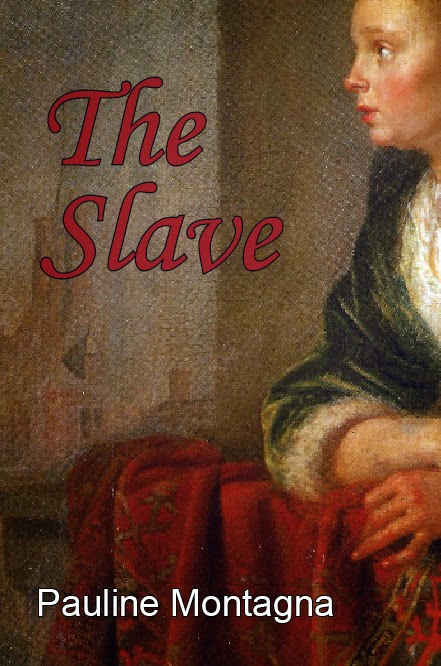
AUTHOR INTERVIEW WITH PAULINE MONTAGNA - GET YOUR FREE COPY OF HER HISTORICAL ROMANCE, THE SLAVE

The Slave by Pauline Montagna is the latest historical novel I read and it is a lovely,  gripping one. A real page turner. I was first drawn to it by the original love story the author proposes as the main feature in the plot. A young woman from a rich Italian family doomed to obey her father first,  then her husband, the man his father chose for her and a slave coming from Asia and serving in her house, a handsome young man with a broken soul and a mysterious past.
As Harriet Martineau states in her works about women's rights, slaves and women experienced the same kind of subjection: an absolute luck of equality, no basic rights, no dignity. Is that why Batu and Aurelia feel immediate sympathy for each other? 
I recommend  you this exciting romance if you enjoy reading historical fiction. I'm sure you'll love it. You can get your free copy following the instructions at the end of my interview with the author, Pauline Montagna. 

*****************************************

First of all, I’d love to know something more about you, Pauline. Did you always want to become a writer?

Although I was born in Australia, all of my grandparents and my mother were born in Italy. My mother was born in the Val d’Agri in Basilicata and came to Australia when she was twelve. My paternal grandfather came to Australia from Isola d’Elba, off the coast of Tuscany, in 1921 and my father was born here. I grew up with a strong Italian identity and studied French, Italian and European history at university.

05/03/2014

M.L. LEGETTE, FAIRY-TALES & MEMORIES - THE ORPHAN & THE THIEF BLOG TOUR + GIVEAWAY

I don’t wear make-up. I hate high heels. I positively detest dressing up. So it’s probably a bit of a shock that all I wanted to be when I was little was a princess in a poofy pink dress. I actually owned many versions of said poofy pink dress in matching plastic shoes. If you met me when I was seven and asked ‘what do you want to be when you grow up?’ I would have promptly answered ‘Cinderella!’

So what is it that makes children love fairy-tales so much? I don’t really know. My enjoyment of them in my youth obviously did not have a lasting impression on my wardrobe, so what is it? Generally speaking, boys make their own suits of armor out of cardboard and pretend to slay dragons and goblins in the backyard, while girls wear glittering, plastic crowns and run about with fairy wands.

This was my childhood, by the way.

19/02/2014

THE HEADMISTRESS OF ROSEMERE, INTERVIEW WITH AUTHOR SARAH LADD

Life is unexpected. Each day holds new surprises — some exciting, others unwanted. What matters most is how we respond to those trying situations. Sarah E. Ladd reminds us the importance of clinging to God to get us through the mountains and valleys of life in The Headmistress of Rosemere .  

Ladd hopes The Headmistress of Rosemere, book two of The Whispers on the Moors series,will encourage readers to look for help in the right place. “I think a lot of people look within themselves to try to find answers to their problems,” explains Ladd. “But if we look to ourselves for solutions, we will be disappointed. Instead, we should take our problems, cares, and worries to God and lay them at His feet. Pray about them. Ask God to make His plans known. When we do this, amazing things can happen.”

Interview

Q: The Headmistress of Rosemere is the second book of a series — do you have a common theme or message throughout the Whispers on the Moors series?


I have always loved the Regency period, and I think that a lot of readers (including myself) have a pre-conceived notion of what a Regency heroine should be like. So I really wanted to challenge that – I wanted to explore what would happen if a typically Regency lady went against traditional societal expectations.So when I approached the book in this series I asked myself, “What would a young woman in the Regency period not do?”And the series was born by answering that single question!

14/02/2014

TRUDY BRASURE: JOHN THORNTON, A PASSIONATE HERO - GUEST POST AND GIVEAWAY

John Thornton: “One word more. You look as if you thought it tainted you to be loved by me. You cannot avoid it. Nay, I, if I would, cannot cleanse you from it. But I would not, if I could. I have never loved any woman before: my life has been too busy, my thoughts too much absorbed with other things. Now I love, and will love.But do not be afraid of too much expression on my part.” ― Elizabeth Gaskell, North and South

Maybe not the most romantic words you'd expect from a gentleman, but so passionate! Don't you agree?
Happy Valentine's Day, everyone! Both to those of you who still believe this is a very special day to live with very special ones and to those who sneer and smirk at the thought of chocolates and flowers, candles and flirting or alike. 
Leave it or take it, this is our Valentine's post and for us today it is an occasion more to celebrate romance and passion. Why should we skip the chance? 
Author Trudy Brasure is my very special guest with a blog post dedicated to our (mine and hers) favourite love story, North and South,  and its hero, our dream Valentine, Mr John Thornton. Read her piece and take your chances to win a paperback  or ebook copy of  her latest retelling, In Consequence. 

18/01/2014

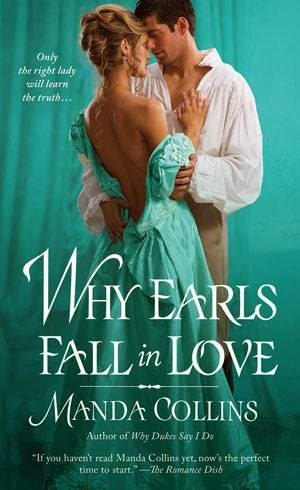
WHY EARLS FALL IN LOVE - INTERVIEW WITH AUTHOR MANDA COLLINS

Hello and welcome at FLY HIGH,  Manda. It’s a great pleasure to have the chance to present you and your new spellbinding novel,   “Why Earls Fall in Love” to my readers, since they are always so interested in historical fiction!  Could you tell us something about your heroine,  Georgina?

Georgina Mowbray is the daughter of an Army officer. She’s also the widow of an Army officer. As such, she has been used to living a very structured lifestyle. And she is very firmly ensconced in the middle class. But, when she becomes friends with Isabella and Perdita—both wealthy aristocrats—she is thrust into the world of the ton. She still, however, must earn a living, so at the beginning of the book we see her in her new position as companion to the wealthy Lady Russell. Who just so happens to be the aunt of our hero—Dominic, Earl of Coniston.
Georgie is disciplined, level-headed, and above all resilient. She will bounce back no matter what befalls her.

Is she inspired to any other literary heroine you admire?

Not any one heroine in particular, no. But while I was writing, I kept thinking of her as being very similar to the real-life character of Florence Nightingale, who was also very disciplined and resilent. Though she had a very unhappy love life,  and I was happy to be able to improve on that.

15/01/2014

PICTURING THE STARS - INTERVIEW WITH SARAH DUNN

Sarah Dunn directing The Hobbit cast
She meets and photographs the movie stars we all admire. She manages to capture very special smiles, looks, intense expressions and beautiful moments. Have you seen her photos of the Potter cast, the Hobbit cast, Tom Hiddleston, Benedict Cumberbatch,  Helen Mirren, Cate Blanchett, Tom Hanks, Jamie Campbell Bower, Shailene Woodley and more? Have a look at her site! I bet you've seen her photos on the covers of the most important magazines. 
I  did and thought: "Sarah Dunn must know things about those people which nobody else knows". I was so curious that... I dared ask. And Sarah Dunn was kind enough to answer. She was very professional, no gossiping!  Here's the interview. 

Well , Sarah, first of all thank you very much indeed for taking the time to answer my questions. Where to start an interview with you? What about a quote? Karl Lagerfeld said, “What I like about photographs is that they capture a moment that’s gone forever, impossible to reproduce.” 
What do you, Sarah, like in photographs?  

Drama and emotion